



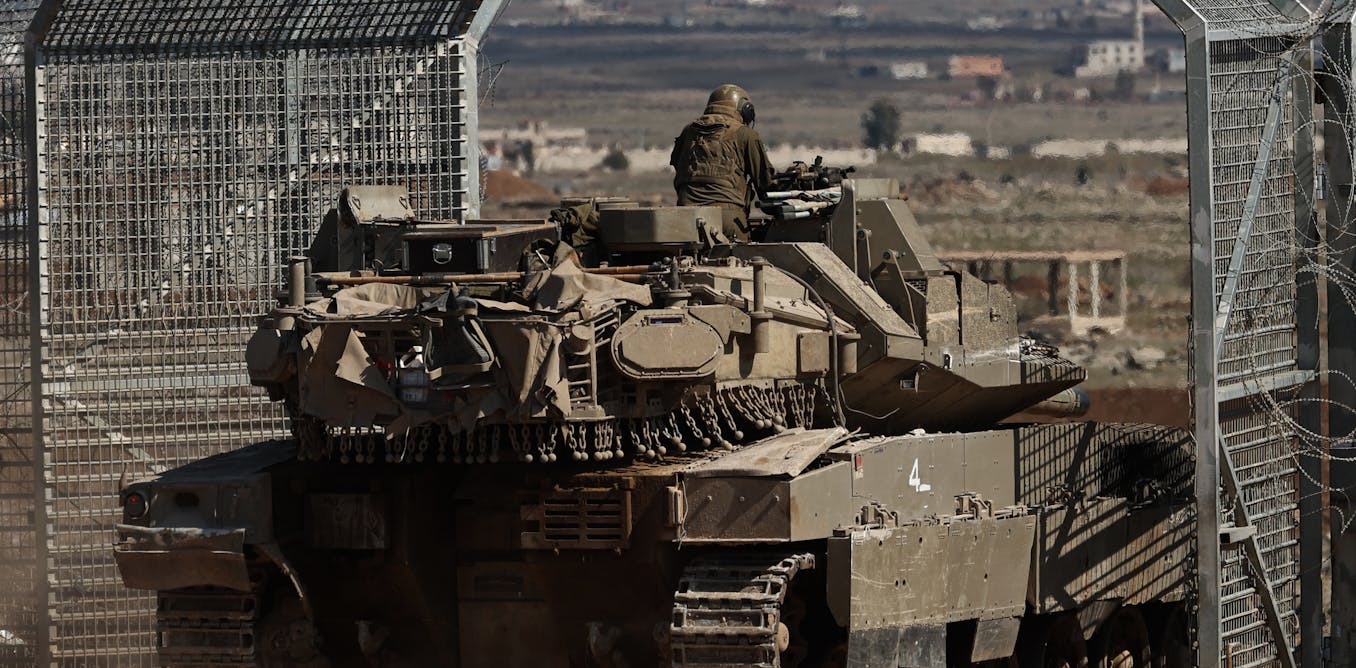
Conflict in Syria has escalated with Israel launching bombing raids against its northern neighbour.
It follows months of fluctuating tensions in southern Syria between the Druze minority and forces aligned with the new government in Damascus. Clashes erupted in the last few days, prompting Israeli airstrikes in defence of the Druze by targeting government bases, tanks, and heavy weaponry.
Israel Minister Amichai Chikli has called the Syrian president Ahmed al-Sharaa –
a terrorist, a barbaric murderer who should be eliminated without delay.
Despite the incendiary language, a ceasefire has been reached, halting the fighting – for now.
Syrian forces have begun withdrawing heavy military equipment from the region, while Druze fighters have agreed to suspend armed resistance, allowing government troops to regain control of the main Druze city of Suwayda.
What do the Druze want?
The Druze are a small religious minority estimated at over one million people, primarily concentrated in the mountainous regions of Lebanon, Syria, Israel, and Jordan.

Atef Safadi/AAP
In Syria, their population is estimated at around 700,000 (of around 23 million total Syrian population), with the majority residing in the southern As-Suwayda Governorate – or province – which serves as their traditional stronghold.
Since the 2011 uprising against the Assad regime, the Druze have maintained a degree of autonomy, successfully defending their territory from various threats, including ISIS and other jihadist groups.
Following Assad’s fall late last year, the Druze — along with other minority groups such as the Kurds in the east and Alawites in the west — have called for the country to be federalized.
They advocate for a decentralised model that would grant greater autonomy to regional communities.
However, the transitional government in Damascus is pushing for a centralised state and seeking to reassert full control over the entire Syrian territory. This fundamental disagreement has led to periodic clashes between Druze forces and government-aligned troops.
Despite the temporary ceasefire, tensions remain high. Given the core political dispute remains unresolved, many expect renewed conflict to erupt in the near future.
Why is Israel involved?
The ousting of the Assad regime created a strategic opening for Israel to expand its influence in southern Syria. Israel’s involvement is driven by two primary concerns:
1. Securing its northern border
Israel views the power vacuum in Syria’s south as a potential threat, particularly the risk of anti-Israeli militias establishing a foothold near its northern border.
During the recent clashes, the Israeli military declared
The Israeli Defence Forces will not allow a military threat to exist in southern Syria and will act against it.
Likewise, Prime Minister Benjamin Netanyahu, who has stated he will not allow Syrian forces south of Damascus:
We are acting to prevent the Syrian regime from harming them [the Druze] and to ensure the demilitarisation of the area adjacent to our border with Syria.
In line with these warnings, the Israeli Air Force has conducted extensive strikes against Syrian military infrastructure, targeting bases, aircraft, tanks, and heavy weaponry.

Bilal Al-Hammoud/AAP
These operations are intended to prevent any future buildup of military capacity that could be used against Israel from the Syrian side of the border.
2. Supporting a federated Syria
Israel is backing the two prominent allied minorities in Syria — the Kurds in the northeast and the Druze in the south — in their push for a federal governance model.
A fragmented Syria, divided along ethnic and religious lines, is seen by some Israeli policymakers as a way to maintain Israeli domination in the region.
This vision is part of what some Israeli officials have referred to as a “New Middle East” — one where regional stability and normalisation emerge through reshaped borders and alliances.
Israeli Foreign Minister Gideon Sa’ar recently echoed this strategy, stating:
A single Syrian state with effective control and sovereignty over all its territory is unrealistic.
For Israel, the logical path forward is autonomy for the various minorities in Syria within a federal structure.
The United States’ role?
According to unconfirmed reports, Washington has privately urged Israel to scale back its military strikes on Syria in order to prevent further escalation and preserve regional stability.
The US is promoting increased support for Syria’s new regime in an effort to help it reassert control and stabilise the country.
There are also indications the US and its allies are encouraging the Syrian government to move toward normalisation with Israel. Reports suggest Tel Aviv has held talks with the new Sharaa-led regime about the possibility of Syria joining the Abraham Accords (diplomatic agreements between Israel and several Arab states), which the regime in Damascus appears open to.
US Special Envoy Tom Barrack has described the recent clashes as “worrisome”, calling for de-escalation and emphasising the need for
a peaceful, inclusive outcome for all stakeholders – including the Druze, Bedouin tribes, the Syrian government, and Israeli forces.
Given the deep-rooted political divisions, competing regional agendas, and unresolved demands from minority groups, the unrest in southern Syria is unlikely to end soon.
Despite another temporary ceasefire, underlying tensions remain. Further clashes are not only possible but highly probable.
Conflict in Syria has escalated with Israel launching bombing raids against its northern neighbour.
It follows months of fluctuating tensions in southern Syria between the Druze minority and forces aligned with the new government in Damascus. Clashes erupted in the last few days, prompting Israeli airstrikes in defence of the Druze by targeting government bases, tanks, and heavy weaponry.
Israel Minister Amichai Chikli has called the Syrian president Ahmed al-Sharaa –
a terrorist, a barbaric murderer who should be eliminated without delay.
Despite the incendiary language, a ceasefire has been reached, halting the fighting – for now.
Syrian forces have begun withdrawing heavy military equipment from the region, while Druze fighters have agreed to suspend armed resistance, allowing government troops to regain control of the main Druze city of Suwayda.
What do the Druze want?
The Druze are a small religious minority estimated at over one million people, primarily concentrated in the mountainous regions of Lebanon, Syria, Israel, and Jordan.
Atef Safadi/AAP
In Syria, their population is estimated at around 700,000 (of around 23 million total Syrian population), with the majority residing in the southern As-Suwayda Governorate – or province – which serves as their traditional stronghold.
Since the 2011 uprising against the Assad regime, the Druze have maintained a degree of autonomy, successfully defending their territory from various threats, including ISIS and other jihadist groups.
Following Assad’s fall late last year, the Druze — along with other minority groups such as the Kurds in the east and Alawites in the west — have called for the country to be federalized.
They advocate for a decentralised model that would grant greater autonomy to regional communities.
However, the transitional government in Damascus is pushing for a centralised state and seeking to reassert full control over the entire Syrian territory. This fundamental disagreement has led to periodic clashes between Druze forces and government-aligned troops.
Despite the temporary ceasefire, tensions remain high. Given the core political dispute remains unresolved, many expect renewed conflict to erupt in the near future.
Why is Israel involved?
The ousting of the Assad regime created a strategic opening for Israel to expand its influence in southern Syria. Israel’s involvement is driven by two primary concerns:
1. Securing its northern border
Israel views the power vacuum in Syria’s south as a potential threat, particularly the risk of anti-Israeli militias establishing a foothold near its northern border.
During the recent clashes, the Israeli military declared
The Israeli Defence Forces will not allow a military threat to exist in southern Syria and will act against it.
Likewise, Prime Minister Benjamin Netanyahu, who has stated he will not allow Syrian forces south of Damascus:
We are acting to prevent the Syrian regime from harming them [the Druze] and to ensure the demilitarisation of the area adjacent to our border with Syria.
In line with these warnings, the Israeli Air Force has conducted extensive strikes against Syrian military infrastructure, targeting bases, aircraft, tanks, and heavy weaponry.
Bilal Al-Hammoud/AAP
These operations are intended to prevent any future buildup of military capacity that could be used against Israel from the Syrian side of the border.
2. Supporting a federated Syria
Israel is backing the two prominent allied minorities in Syria — the Kurds in the northeast and the Druze in the south — in their push for a federal governance model.
A fragmented Syria, divided along ethnic and religious lines, is seen by some Israeli policymakers as a way to maintain Israeli domination in the region.
This vision is part of what some Israeli officials have referred to as a “New Middle East” — one where regional stability and normalisation emerge through reshaped borders and alliances.
Israeli Foreign Minister Gideon Sa’ar recently echoed this strategy, stating:
A single Syrian state with effective control and sovereignty over all its territory is unrealistic.
For Israel, the logical path forward is autonomy for the various minorities in Syria within a federal structure.
The United States’ role?
According to unconfirmed reports, Washington has privately urged Israel to scale back its military strikes on Syria in order to prevent further escalation and preserve regional stability.
The US is promoting increased support for Syria’s new regime in an effort to help it reassert control and stabilise the country.
There are also indications the US and its allies are encouraging the Syrian government to move toward normalisation with Israel. Reports suggest Tel Aviv has held talks with the new Sharaa-led regime about the possibility of Syria joining the Abraham Accords (diplomatic agreements between Israel and several Arab states), which the regime in Damascus appears open to.
US Special Envoy Tom Barrack has described the recent clashes as “worrisome”, calling for de-escalation and emphasising the need for
a peaceful, inclusive outcome for all stakeholders – including the Druze, Bedouin tribes, the Syrian government, and Israeli forces.
Given the deep-rooted political divisions, competing regional agendas, and unresolved demands from minority groups, the unrest in southern Syria is unlikely to end soon.
Despite another temporary ceasefire, underlying tensions remain. Further clashes are not only possible but highly probable.