



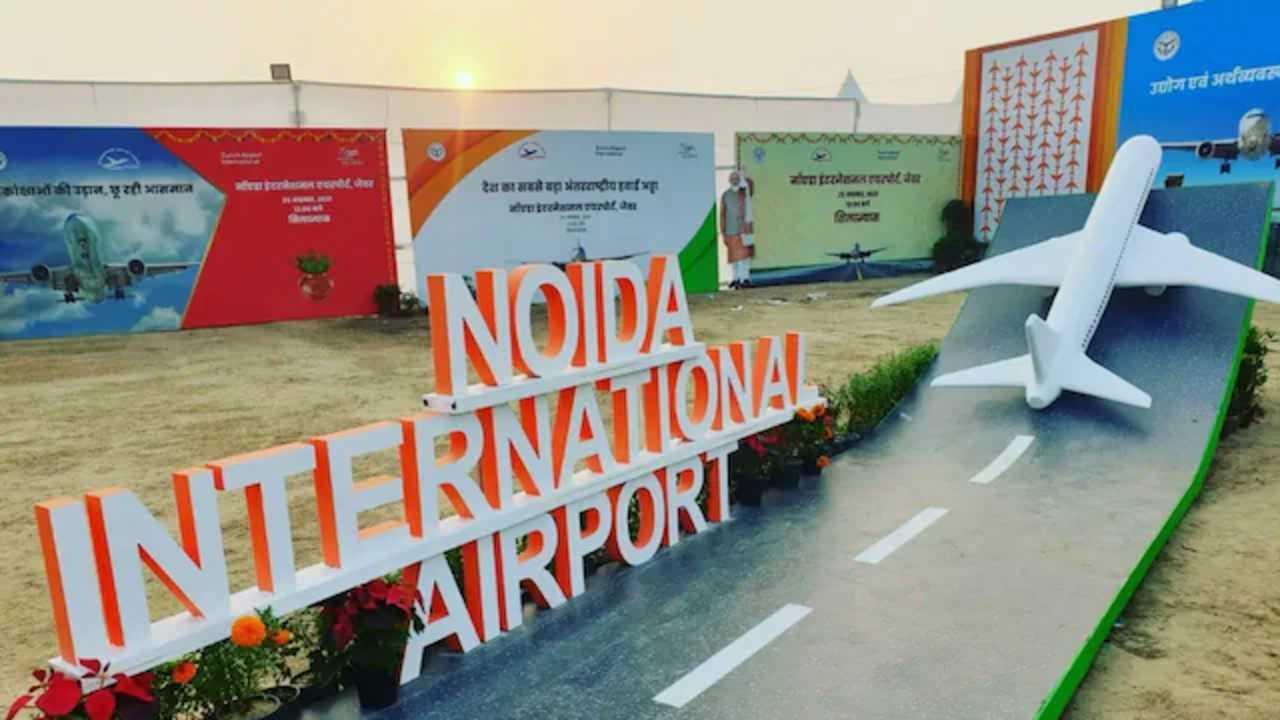
Christoph Schnellmann was appointed Chief Executive Officer (CEO) of Noida International Airport in 2020. 6 years later, his appointment still has to clear a major regulatory hurdle: he has not yet received the mandatory security clearance under India’s aviation security framework.
A government official told CNBC-TV18 that the delay likely stems from an aviation security order issued by the Bureau of Civil Aviation Security (BCAS). “Under BCAS norms, the airport CEO also acts as the security coordinator. This position is mandated for an Indian national because it involves handling classified security protocols and intelligence inputs,” the official said. Schnellmann is Swiss.
The lack of a security clearance leaves a cloud over Schnellmann’s stint at the airport, and the immediate future of the airport itself. The airport, which was inaugurated by Prime Minister Narendra Modi on Saturday, March 28, 2026
, is expected to begin operations soon. Schnellmann has been overseeing the development of the airport for the last 6 years, and has been involved in various aspects, right from land acquisition.
ALSO READ | In Pictures | PM Narendra Modi inaugurates ₹11,200 crore Noida International Airport Phase I
Airlines vs airports
India’s aviation industry is no stranger to expatriates and foreign nationals in key leadership positions. However, all of these have been in airlines. Unlike airlines, however, airports are classified as strategic infrastructure with layered security oversight. Hence the different regulatory treatment.
The CEO of an airport, therefore, is required to:
- Chair aviation security meetings,
- Coordinate with intelligence agencies including the Intelligence Bureau,
- And oversee implementation of anti-hijacking and counter-terror protocols.
“These are not routine administrative functions. The role involves access to highly sensitive information that cannot be shared with foreign nationals,” the official said.
The official, however, added that while the nationality issue is not explicit, it is implied. “There is no one-line rule that says a foreign national cannot be CEO. But the CEO must double up as the security coordinator, and that role requires Indian nationality and security clearance,” they explained.
This rule did not need to be enforced so far because the airport was not operational. However, the BCAS norms effectively restricting foreign nationals from serving as CEO of an airport will kick in once the airport becomes operational.
NIA response silent on CEO’s future
Noida International Airport did not respond to CNBC-TV18’s specific queries regarding Schnellmann’s security clearance, addressing only the efforts being made to get the airport operational as soon as possible.
It says, “It is a matter of great pride for us that the Hon’ble Prime Minister inaugurated Noida International Airport, marking a significant milestone in the project’s journey. The airport’s Aerodrome Security Programme (ASP) is currently under review with the Bureau of Civil Aviation Security (BCAS), and we are working closely with the authorities to secure the necessary approval. Following this, we will coordinate with all stakeholders to finalise timelines for the commencement of commercial operations. Our efforts are focused on ensuring that all systems, processes, and personnel are fully aligned to deliver a safe, efficient, and seamless start of operations.”
Zurich Airport’s dilemma
The cloud over Schnellman’s future at the airport puts Zurich Airport International AG in a tough spot. The entity is the concessionaire that has been developing and will operate Noida International Airport. It has invested over ₹11,000 crore in the first phase of the airport’s development, and plans to invest more over the remaining 3 phases.
While Schnellmann has been ZAI AG’s point person leading the project since its inception, sources say the regulatory challenge becomes critical as the airport prepares to begin operations.
Limited options ahead
Sources also indicate that an exemption to the rules may not be on the cards. Neither is an amendment to the rules likely in the near term given high geopolitical sensitivities.
This leaves the airport operator with two practical options:
One: it can appoint an Indian national as CEO. Two: it can restructure leadership to ensure security responsibilities are handled by an Indian executive. However, neither may be palatable to ZAI AG, since Schnellmann has been deeply involved in the airport’s development from the blueprint stage, and has spent the last 5-plus years working closely with State and Central Government officials and stakeholders to effect operational readiness and ensure development timelines are met.
In addition, industry sources describe Schnellmann as a well-regarded aviation professional with deep operational expertise. Schnellmann was previously associated with Bangalore’s Kempegowda International Airport, where he served as Zurich Airport International AG’s point person. ZAI AG has a stake in Kempegowda International Airport as well.
“He is widely respected and knows his job well. But the regulatory framework leaves very little room unless a workaround is found,” the former official said.
A larger policy dilemma
Schnellmann is also the architect behind Noida International Airport’s future plans. The airport is a cornerstone in India’s infrastructure push, and is widely seen as crucial as a major alternative to an already overcrowded Indira Gandhi International Airport. It is expected to handle millions of passengers annually in its first phase itself, and Schnellmann was seen as central to driving its rapid development and expansion.
The situation also puts the spotlight on a larger policy dilemma. With Zurich Airport International AG investing thousands of crores to build the airport, questions are now being raised as to whether foreign investors can realistically operate strategic infrastructure without holding top executive control.
Experts say that while national security considerations remain non-negotiable, the current framework leaves little room for flexibility. This could potentially create a structural mismatch between capital ownership and operational authority; the dichotomy could put future investments of this kind in jeopardy.