


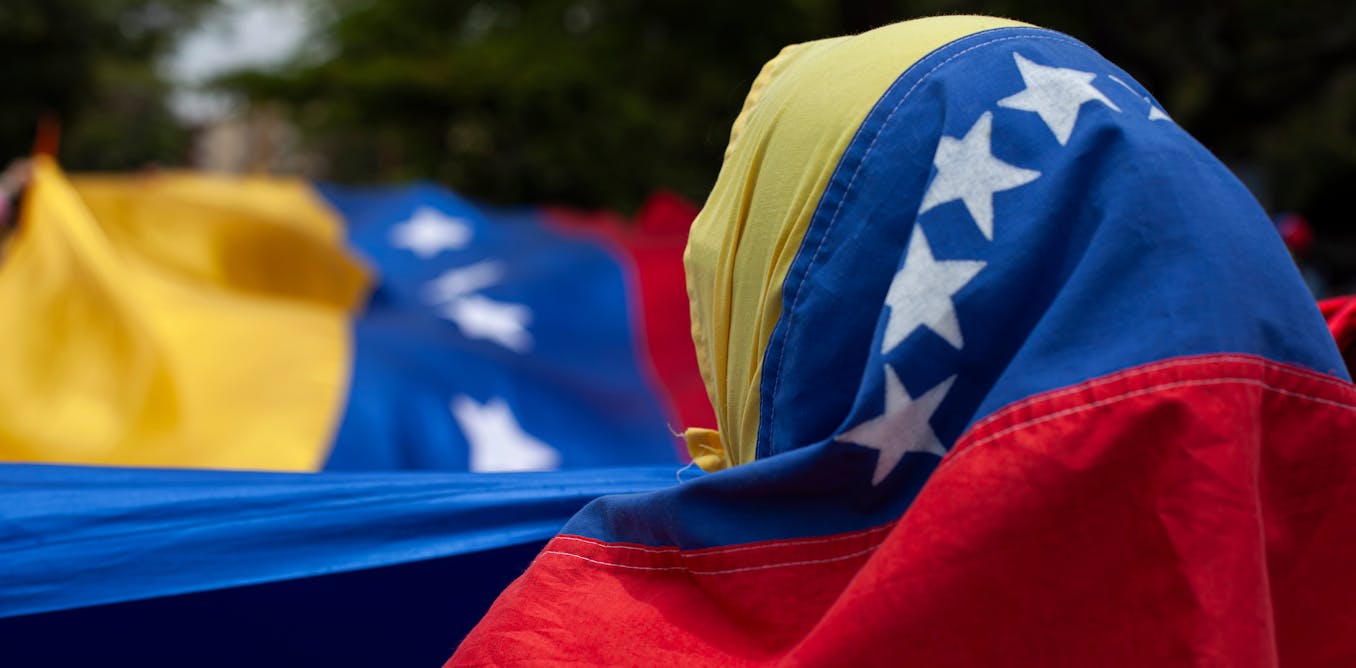
On January 3, the world watched in disbelief as the Venezuelan president, Nicolás Maduro, was captured by US forces. It was a dramatic geopolitical event that would reverberate not just in Washington and Caracas, but deep into global financial markets.
Financial speculation erupted across prediction platforms, bond markets and even cryptocurrency. It was a frenzy that, for some, translated into enormous profits – something I have looked at closely since 2023.
At the same time, Donald Trump’s personal wealth has reportedly soared amid broader shifts in financial markets and his own crypto ventures. It was reported that the value of the US president’s crypto-related holdings may have increased by US$140 million (£104 million) following the Venezuela raid. It feeds into a broader trend of rapid growth in digital assets tied to the president and his family.
What this episode reveals is not only how geopolitics shapes markets, but how intertwined political power, speculation and personal wealth have become. This matters not just to investors but to ordinary citizens. The world’s future has rarely been more uncertain, but according to American economist Frank Knight, uncertainty is the road to profit.
Prediction markets are platforms where people bet on political or real-world outcomes. Users can buy and sell shares representing yes/no responses concerning the outcome of anything from sporting events, celebrity news or political shakeups. On Polymarket, an online prediction market, one anonymous trader turned a stake of around US$34,000 into more than US$400,000 by betting that Maduro would be ousted by the end of January.
Polymarket later announced however that bets on Maduro’s capture did not qualify and that it will not pay out. In a statement, it said the bet referred to “US military operations intended to establish control” in Venezuela.
But nonetheless, the potential windfall sent shock waves through the financial press. How did this platform user know? Were they lucky, or did someone with an inside track get there first? This has fuelled debate about whether prediction markets are legitimate aggregators of information or thinly regulated gambling platforms ripe for ethically questionable insider gains.
Cryptocurrency and prediction markets overlap in other ways. Many of these platforms – including those backed or acquired by major crypto players – operate on blockchain infrastructure and allow wagers in digital assets.
Trump’s impulse to loosen regulatory oversight has, over his tenure, tended to benefit crypto markets. While it’s too soon to quantify any direct effect on his personal holdings, the symbolic link between political risk and crypto valuation is unmistakable to investors who see turmoil as volatility they can profit from.
But in Washington, politicians are now proposing insider-trading restrictions specific to prediction platforms.
Turning distress into dollars
If prediction markets are the high-risk, high-return fringe of this story, the surge in Venezuelan sovereign bonds is its mainstream financial counterpart.
For years Venezuela’s government and state oil company Petróleos de Venezuela SA (PDVSA) defaulted on billions in debt, with bonds trading at deep discounts. When Maduro was captured and the prospect of a political reset seemed real, those distressed bonds jumped sharply. Some rose nearly 20% in value as investors saw the prospect of debt restructuring or an easing of US sanctions.
Hedge funds and other institutional investors that had taken long positions in on this beaten-down debt suddenly found themselves on the brink of sizeable profits. This was not a gamble on an election or a crypto token – it was a political event changing credit risk expectations.
It is the kind of speculation that made headlines in the 1990s sovereign debt crises and again in Greek bonds during the eurozone turmoil. But it’s rare to see such dramatic moves tied to a single operation.
The bond rally illustrates how modern markets internalise geopolitical risk: when a regime change seemed possible, investors put money down that the new status quo would repair economic ties, unlock oil revenues and legitimise Venezuelan debt. The fact that this rally came so quickly after the raid shows how responsive markets are to political surprises.

EPA/Henry Chirinos
Beyond prediction bets and debt traders, a third wave of speculation rippled through energy stocks and broader markets.
US companies – particularly Chevron, which already holds Venezuelan interests – saw their shares jump as investors priced in the possibility of the US gaining access to Venezuela’s vast oil reserves. News that Washington may exercise temporary control over Venezuelan oil sales only amplified this narrative, sending energy stocks indexes and broader market indices higher in the days after the raid.
The rally was not universal – global oil prices were more muted and even fell at times as markets assessed potential oversupply scenarios. But the broader trend was clear: geopolitical change in a major oil-producing nation quickly raised hopes of higher share prices for some energy firms.
This is not just Wall Street optimism – it reflects real strategic thinking about how a post-Maduro Venezuela might unlock tens of millions of barrels of oil and rekindle investment in one of the world’s largest reserves. It is a reminder that behind seemingly chaotic headlines, markets are always trying to price tomorrow’s economic reality today.
The capture of Maduro was a financial event as well as a political one. It exposed how deeply intertwined markets and geopolitics have become – and how much profit awaits those who can read the signals first.
On January 3, the world watched in disbelief as the Venezuelan president, Nicolás Maduro, was captured by US forces. It was a dramatic geopolitical event that would reverberate not just in Washington and Caracas, but deep into global financial markets.
Financial speculation erupted across prediction platforms, bond markets and even cryptocurrency. It was a frenzy that, for some, translated into enormous profits – something I have looked at closely since 2023.
At the same time, Donald Trump’s personal wealth has reportedly soared amid broader shifts in financial markets and his own crypto ventures. It was reported that the value of the US president’s crypto-related holdings may have increased by US$140 million (£104 million) following the Venezuela raid. It feeds into a broader trend of rapid growth in digital assets tied to the president and his family.
What this episode reveals is not only how geopolitics shapes markets, but how intertwined political power, speculation and personal wealth have become. This matters not just to investors but to ordinary citizens. The world’s future has rarely been more uncertain, but according to American economist Frank Knight, uncertainty is the road to profit.
Prediction markets are platforms where people bet on political or real-world outcomes. Users can buy and sell shares representing yes/no responses concerning the outcome of anything from sporting events, celebrity news or political shakeups. On Polymarket, an online prediction market, one anonymous trader turned a stake of around US$34,000 into more than US$400,000 by betting that Maduro would be ousted by the end of January.
Polymarket later announced however that bets on Maduro’s capture did not qualify and that it will not pay out. In a statement, it said the bet referred to “US military operations intended to establish control” in Venezuela.
But nonetheless, the potential windfall sent shock waves through the financial press. How did this platform user know? Were they lucky, or did someone with an inside track get there first? This has fuelled debate about whether prediction markets are legitimate aggregators of information or thinly regulated gambling platforms ripe for ethically questionable insider gains.
Cryptocurrency and prediction markets overlap in other ways. Many of these platforms – including those backed or acquired by major crypto players – operate on blockchain infrastructure and allow wagers in digital assets.
Trump’s impulse to loosen regulatory oversight has, over his tenure, tended to benefit crypto markets. While it’s too soon to quantify any direct effect on his personal holdings, the symbolic link between political risk and crypto valuation is unmistakable to investors who see turmoil as volatility they can profit from.
But in Washington, politicians are now proposing insider-trading restrictions specific to prediction platforms.
Turning distress into dollars
If prediction markets are the high-risk, high-return fringe of this story, the surge in Venezuelan sovereign bonds is its mainstream financial counterpart.
For years Venezuela’s government and state oil company Petróleos de Venezuela SA (PDVSA) defaulted on billions in debt, with bonds trading at deep discounts. When Maduro was captured and the prospect of a political reset seemed real, those distressed bonds jumped sharply. Some rose nearly 20% in value as investors saw the prospect of debt restructuring or an easing of US sanctions.
Hedge funds and other institutional investors that had taken long positions in on this beaten-down debt suddenly found themselves on the brink of sizeable profits. This was not a gamble on an election or a crypto token – it was a political event changing credit risk expectations.
It is the kind of speculation that made headlines in the 1990s sovereign debt crises and again in Greek bonds during the eurozone turmoil. But it’s rare to see such dramatic moves tied to a single operation.
The bond rally illustrates how modern markets internalise geopolitical risk: when a regime change seemed possible, investors put money down that the new status quo would repair economic ties, unlock oil revenues and legitimise Venezuelan debt. The fact that this rally came so quickly after the raid shows how responsive markets are to political surprises.
EPA/Henry Chirinos
Beyond prediction bets and debt traders, a third wave of speculation rippled through energy stocks and broader markets.
US companies – particularly Chevron, which already holds Venezuelan interests – saw their shares jump as investors priced in the possibility of the US gaining access to Venezuela’s vast oil reserves. News that Washington may exercise temporary control over Venezuelan oil sales only amplified this narrative, sending energy stocks indexes and broader market indices higher in the days after the raid.
The rally was not universal – global oil prices were more muted and even fell at times as markets assessed potential oversupply scenarios. But the broader trend was clear: geopolitical change in a major oil-producing nation quickly raised hopes of higher share prices for some energy firms.
This is not just Wall Street optimism – it reflects real strategic thinking about how a post-Maduro Venezuela might unlock tens of millions of barrels of oil and rekindle investment in one of the world’s largest reserves. It is a reminder that behind seemingly chaotic headlines, markets are always trying to price tomorrow’s economic reality today.
The capture of Maduro was a financial event as well as a political one. It exposed how deeply intertwined markets and geopolitics have become – and how much profit awaits those who can read the signals first.