


In February, following President Donald Trump‘s inauguration, I was in a packed International Religious Freedom (IRF) Summit auditorium when Vice President JD Vance gave an speech, describing IRF as “a topic whose importance grows with each passing moment.”
He was right, and the landscape of oppression and persecution continues to deteriorate internationally. Regimes, often in the press for their heinous violations of human rights, destabilizing global order and peace, are some of the worst offenders. Russia, China, North Korea, and Iran, leading a rogues’ gallery of autocratic villains, constantly attack people of faith and places of worship in order to undermine any allegiance that is devoted to a power higher than their own. Additionally, deadly waves of violent extremism in places like Nigeria and India are devastating whole communities and going unchecked.

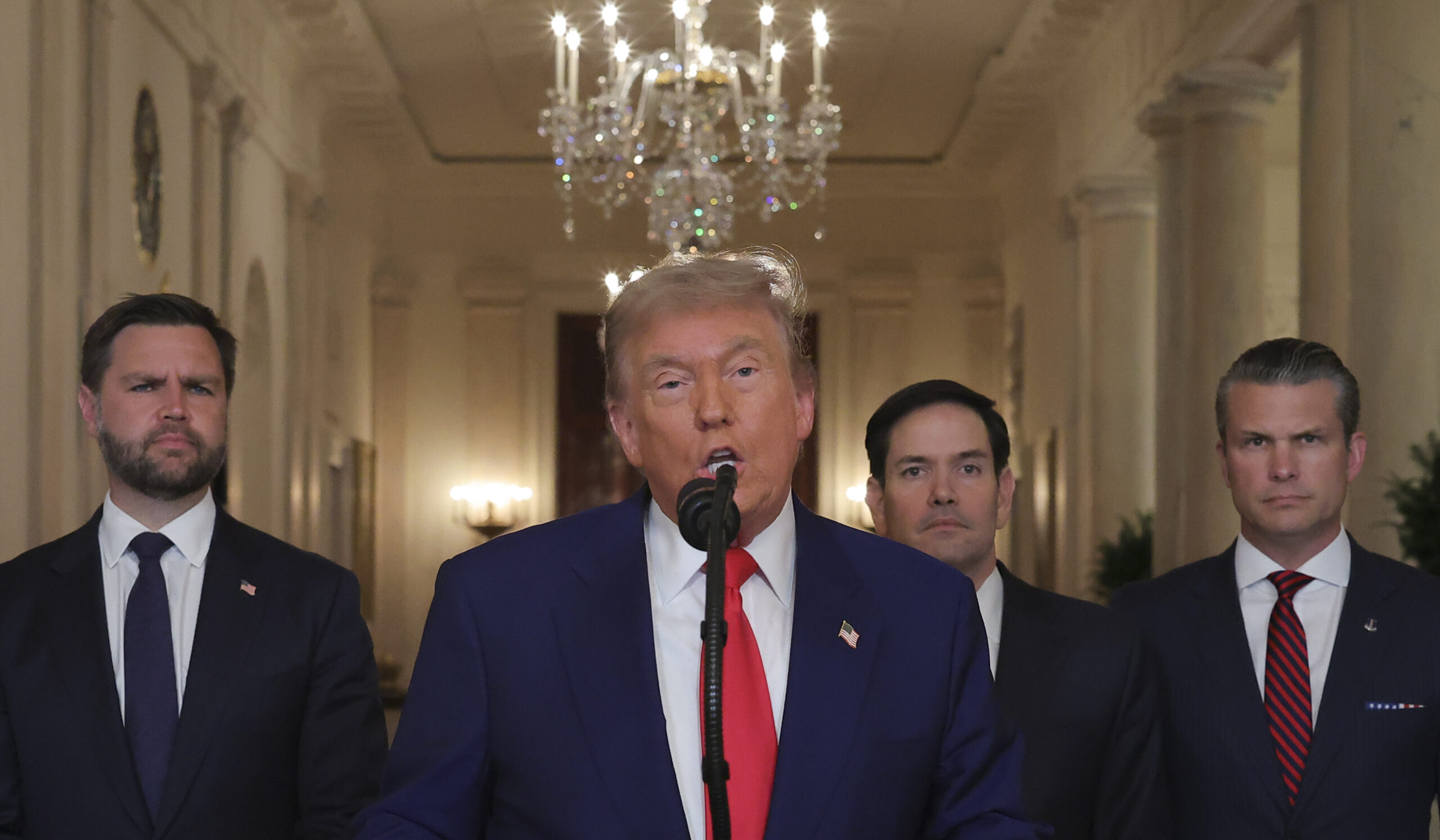
Carlos Barria – Pool/Getty Images
There are both humanitarian and deeply strategic reasons for prioritizing international religious freedom in foreign policy. Where such freedoms are safeguarded, democracy is more robust, local and regional conflicts are less likely, cross-border migration is reduced, and prosperity and the prospect of lucrative business and trade opportunities abound. Regimes that do not respect or properly defend the inalienable rights of their citizens to exercise their religious beliefs in freedom are not contributors to international peace and prosperity, and they are not reliable partners. When the United States champions this cause, it strengthens relationships with emerging democracies, builds trust with civil societies, and counters the influence of dictatorships that use religious repression as a weapon of control.
President Trump in his first administration demonstrated resolute leadership in prioritizing religious freedom in foreign policy, founding the International Freedom of Religion or Belief Alliance (IRFBA), establishing and hosting annual ministerial conferences to advance the issue with governments around the world, engaging forcefully with nations that violated this right, and advocating for the release of prisoners of conscience. In his address at the IRF Summit, Vance acknowledged that effort, stating, “The first Trump administration took critical steps to protect the rights of the faithful by rescuing pastors persecuted by foreign regimes or bringing relief to faith communities facing genocidal terror from ISIS.”
While the comments of JD Vance, and the appointment of Marco Rubio as secretary of State—a long-devoted champion of the cause—served as encouraging indicators of the new Trump administration’s commitment to advancing this issue in foreign policy, the U.S. is not meeting the standard it has set for itself or fulfilling the role the rest of the free world has come to expect.
Other nations are stepping up to the plate. The Czech Republic’s Robert Řehák, special envoy for holocaust, interfaith dialogue, and freedom of religion, has been an outspoken and resolute advocate for individuals imprisoned on account of their faith. He has hosted purposeful events on combatting antisemitism and anti-Muslim hate. He will be hosting the annual ministerial for the second time in Prague in November.
The U.K. special envoy has launched a focused religious freedom policy platform at the U.K. Foreign Office. Germany recently made the auspicious appointment of veteran member of the Bundestag, Thomas Rachel, as its new commissioner for freedom of religion or belief following their recent elections. Many other nations are driving forward in collaboration to tackle the scourge of persecution. Nevertheless, the outsized power, influence, and resources the U.S. offers are still needed if lasting progress is to be achieved.
The U.S. has traditionally served as the elder statesman and guiding light among international partners, but the State Department’s absence at the head of the table this year has not gone unnoticed. Congressman Mark Walker was nominated in April to serve as ambassador-at-large for international religious freedom and his background and record offer great promise. The U.S. Senate Foreign Relations Committee has not yet given the nomination its consideration.
At a time when the role of IRF ambassador demands both moral conviction and diplomatic skill, the pastor and former representative from North Carolina offers both. His leadership would immediately enhance America’s ability to convene partners, engage international institutions, and ensure that religious liberty remains a key pillar of U.S. foreign policy. His confirmation would enable the U.S. to stand shoulder-to-shoulder with its allies, contributing its considerable influence on the international stage, and working effectively and strategically to defend all who suffer because of their spiritual convictions or religious identities.
While delivering on an IRF ambassador would not solve every problem, or in itself represent a giant leap forward in religious freedom policy, it would restore leadership within the State Department, empower the IRF Office to ramp up engagement, and create opportunities for much needed development and innovation in this field.
Vice President Vance promised that this administration would do even more than was achieved during Donald Trump’s first term to advance religious freedom at home and abroad. With the ongoing rise of authoritarianism around the world, extremists operating at liberty, and faith communities enduring unspeakable persecution, the U.S. Senate must step up and get Walker’s confirmation resolved. He and Secretary Rubio would make a powerful alliance at the State Department, strengthening American leadership on this vital issue.
Miles P. J. Windsor serves as director of strategic campaigns for international strategies at the Religious Freedom Institute.
The views expressed in this article are the writer’s own.
In February, following President Donald Trump‘s inauguration, I was in a packed International Religious Freedom (IRF) Summit auditorium when Vice President JD Vance gave an speech, describing IRF as “a topic whose importance grows with each passing moment.”
He was right, and the landscape of oppression and persecution continues to deteriorate internationally. Regimes, often in the press for their heinous violations of human rights, destabilizing global order and peace, are some of the worst offenders. Russia, China, North Korea, and Iran, leading a rogues’ gallery of autocratic villains, constantly attack people of faith and places of worship in order to undermine any allegiance that is devoted to a power higher than their own. Additionally, deadly waves of violent extremism in places like Nigeria and India are devastating whole communities and going unchecked.
Carlos Barria – Pool/Getty Images
There are both humanitarian and deeply strategic reasons for prioritizing international religious freedom in foreign policy. Where such freedoms are safeguarded, democracy is more robust, local and regional conflicts are less likely, cross-border migration is reduced, and prosperity and the prospect of lucrative business and trade opportunities abound. Regimes that do not respect or properly defend the inalienable rights of their citizens to exercise their religious beliefs in freedom are not contributors to international peace and prosperity, and they are not reliable partners. When the United States champions this cause, it strengthens relationships with emerging democracies, builds trust with civil societies, and counters the influence of dictatorships that use religious repression as a weapon of control.
President Trump in his first administration demonstrated resolute leadership in prioritizing religious freedom in foreign policy, founding the International Freedom of Religion or Belief Alliance (IRFBA), establishing and hosting annual ministerial conferences to advance the issue with governments around the world, engaging forcefully with nations that violated this right, and advocating for the release of prisoners of conscience. In his address at the IRF Summit, Vance acknowledged that effort, stating, “The first Trump administration took critical steps to protect the rights of the faithful by rescuing pastors persecuted by foreign regimes or bringing relief to faith communities facing genocidal terror from ISIS.”
While the comments of JD Vance, and the appointment of Marco Rubio as secretary of State—a long-devoted champion of the cause—served as encouraging indicators of the new Trump administration’s commitment to advancing this issue in foreign policy, the U.S. is not meeting the standard it has set for itself or fulfilling the role the rest of the free world has come to expect.
Other nations are stepping up to the plate. The Czech Republic’s Robert Řehák, special envoy for holocaust, interfaith dialogue, and freedom of religion, has been an outspoken and resolute advocate for individuals imprisoned on account of their faith. He has hosted purposeful events on combatting antisemitism and anti-Muslim hate. He will be hosting the annual ministerial for the second time in Prague in November.
The U.K. special envoy has launched a focused religious freedom policy platform at the U.K. Foreign Office. Germany recently made the auspicious appointment of veteran member of the Bundestag, Thomas Rachel, as its new commissioner for freedom of religion or belief following their recent elections. Many other nations are driving forward in collaboration to tackle the scourge of persecution. Nevertheless, the outsized power, influence, and resources the U.S. offers are still needed if lasting progress is to be achieved.
The U.S. has traditionally served as the elder statesman and guiding light among international partners, but the State Department’s absence at the head of the table this year has not gone unnoticed. Congressman Mark Walker was nominated in April to serve as ambassador-at-large for international religious freedom and his background and record offer great promise. The U.S. Senate Foreign Relations Committee has not yet given the nomination its consideration.
At a time when the role of IRF ambassador demands both moral conviction and diplomatic skill, the pastor and former representative from North Carolina offers both. His leadership would immediately enhance America’s ability to convene partners, engage international institutions, and ensure that religious liberty remains a key pillar of U.S. foreign policy. His confirmation would enable the U.S. to stand shoulder-to-shoulder with its allies, contributing its considerable influence on the international stage, and working effectively and strategically to defend all who suffer because of their spiritual convictions or religious identities.
While delivering on an IRF ambassador would not solve every problem, or in itself represent a giant leap forward in religious freedom policy, it would restore leadership within the State Department, empower the IRF Office to ramp up engagement, and create opportunities for much needed development and innovation in this field.
Vice President Vance promised that this administration would do even more than was achieved during Donald Trump’s first term to advance religious freedom at home and abroad. With the ongoing rise of authoritarianism around the world, extremists operating at liberty, and faith communities enduring unspeakable persecution, the U.S. Senate must step up and get Walker’s confirmation resolved. He and Secretary Rubio would make a powerful alliance at the State Department, strengthening American leadership on this vital issue.
Miles P. J. Windsor serves as director of strategic campaigns for international strategies at the Religious Freedom Institute.
The views expressed in this article are the writer’s own.