


Ratios: What Are They?
In finance, a ratio is the mathematical relationship between the prices or values of two different assets. Essentially, a ratio shows how many units of one asset are needed to purchase a single unit of another asset. When plotted over the long term, these figures can highlight relationships, relative performance, or potential mispricings across various asset classes.
Ratios are particularly useful because they strip away the informational noise created by inflation, central bank money printing, and short-term currency fluctuations. By pricing one asset relative to another, a trader can determine whether something is truly cheap or expensive.
For example, gold ratios can reveal how gold performs against silver, oil, equities, and even real estate without the distortion from exchange rates or monetary policy. Indeed, pricing currencies or other financial assets specifically against gold makes perfect sense. As a neutral, tangible asset known for preserving its value during high-inflation times, gold provides a less biased approach to viewing the global financial market.
Kar Yong Ang, a financial market analyst at Elev8 broker, explains: ‘In trading, ratios help identify trends, divergences, and mean-reversion opportunities. When trading via CFDs [Contracts for Difference], understanding these ratios opens up opportunities for statistical arbitrage. Because a CFD allows investors to go both long and short without owning the underlying physical asset, traders can trade the ratio itself, which is a very flexible tool in volatile markets’.
Gold Ratios
The Gold-to-Silver Ratio
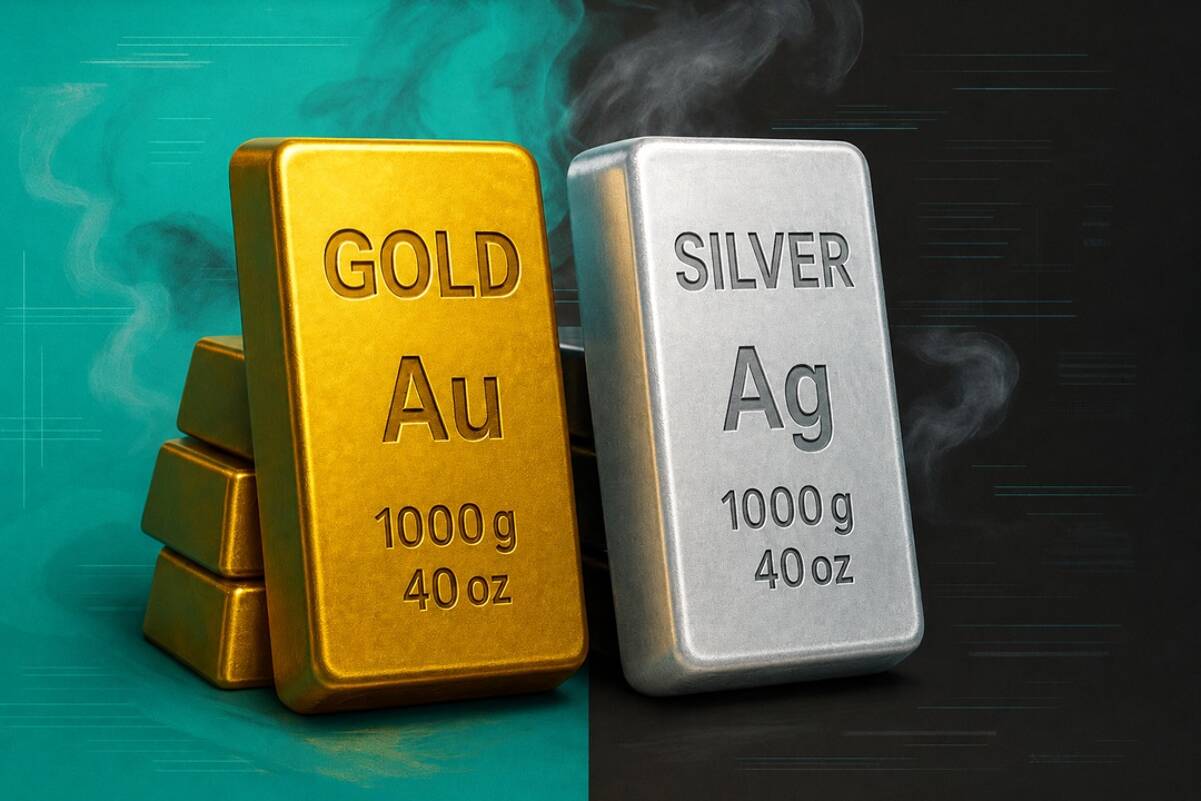
The gold-to-silver ratio (GSR) is the oldest exchange rate in human history. It existed long before gold futures contracts began trading on the COMEX exchange in 1982. GSR is calculated by dividing the market price of gold by the market price of silver, showing how many ounces of silver are needed to buy one ounce of gold.
While both (gold and silver) are precious metals and share jewellery and investment demand, their underlying fundamentals differ significantly. Gold maintains an intensive monetary function, favoured heavily by central banks, whereas silver is heavily tied to the industrial cycle.
The Gold-to-Equities Ratio
This ratio prices major stock indices (such as the S&P 500 or the Dow Jones Industrial Average) in terms of gold ounces, offering a ‘real asset’ perspective on equity indices that is free of fiat currency effects.
Historically, the equity-to-gold ratio has peaked approximately every 35 to 40 years—notably in the late 1920s, the mid-1960s, and the late 1990s. Following each of these major peaks, equities typically entered multi-year bear markets, accompanied by a major acceleration in gold prices.
For example, after the 2000 peak, equities faced multi-year weakness while gold advanced, driving the ratio lower. This ratio helps traders see if capital is getting out of monetary assets and flows back into hard, tangible assets.
The Gold-to-Oil Ratio
Measuring the price of crude oil against gold provides an essential metric for assessing the health of the global economy. Under the pre-1971 gold standard, oil traded cheaply relative to gold, but after the dollar decoupled from gold, both oil and gold prices adjusted dramatically, with the ratio spiking before settling around a long-term average, near the 20 mark.
During economic expansions, both commodities typically rise together, and the ratio remains relatively stable. However, supply-driven oil spikes (due to geopolitics, and OPEC decisions) tend to sharply lower the ratio. Similarly, demand-driven moves (such as the decline in global travel during the COVID-19 pandemic in 2020) push the ratio higher.
Interestingly, since 1972, prolonged declines in the gold/oil ratio (oil rising faster than gold) have preceded most U.S. recessions, often because elevated oil prices relative to gold weigh on consumer demand and investment. In fact, structural drops of 20% to 30% in the gold-to-oil ratio from its recent highs have frequently preceded significant declines in global economic activity and anticipated major global recessions.
Gold/Brent ratio chart