



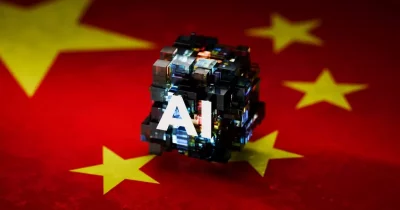
Most governments around the world are still figuring out how to talk about AI and jobs. China has decided to skip the conversation and go straight to enforcement.
Chinese authorities are constructing an increasingly explicit policy framework: companies should adopt artificial intelligence aggressively, but firing workers to do it is not acceptable. Courts are backing that position with real rulings, state media is amplifying the message, and regulators are drafting new rules to make it stick.
The legal scaffolding
Two court cases have established early precedent for how China plans to handle the collision between AI and employment law. In Beijing, an arbitration authority ruled in December 2025 that terminating employees solely because their roles were automated does not constitute valid grounds for dismissal under China’s Labor Contract Law. The employer in that case was ordered to pay 791,815 yuan in compensation.
A separate case out of the Hangzhou Intermediate People’s Court involved a tech worker whose job was partially automated. The company responded by slashing the employee’s pay by 40% and eventually terminating them. The court found the termination unlawful.
The legal reasoning in both cases is worth paying attention to. Beijing’s arbitration authority categorized AI adoption as a “voluntary business decision” rather than an economic necessity. In plain terms: if a company chooses to bring in AI, that’s the company’s prerogative, but the consequences of that choice cannot be offloaded onto workers without first exploring alternatives like retraining.
The political pressure
The courtroom activity is only one piece of a broader campaign. Vice Premier He Lifeng has been directly engaging with employers on the subject, and the conversations have apparently included some sobering math. A full rollout of AI across Chinese enterprises could eliminate up to 30% of existing roles, according to discussions He Lifeng has had with business leaders.
Beijing’s answer is not to slow down AI adoption. It is to insist that companies channel automation toward creating new positions rather than simply eliminating old ones. State news agency Xinhua published commentary in March 2026 arguing that equating AI with job cuts undermines both a company’s competitiveness and its employees’ trust.
China’s Ministry of Human Resources followed up in January 2026 with new policies specifically designed to address AI’s employment effects, with a focus on key industries most exposed to automation.
How this contrasts with the West
The timing of China’s approach is notable because it runs directly counter to what is happening in Western markets. Major US and European companies have been relatively open about using AI to reduce headcount. Tech firms, financial institutions, and media companies have announced layoffs explicitly linked to automation capabilities, often framing the cuts as efficiency gains for shareholders.
For investors watching Chinese tech and industrial firms, the regulatory environment creates a specific set of considerations. Companies that can demonstrate genuine AI-driven productivity gains while maintaining headcount will likely receive favorable treatment from regulators, courts, and state media. Conversely, firms that attempt to quietly reduce staff under the cover of AI adoption face real legal exposure. The Beijing and Hangzhou rulings suggest that Chinese courts are prepared to impose significant financial penalties on employers who cut corners.
Disclosure: This article was edited by Editorial Team. For more information on how we create and review content, see our Editorial Policy.
Most governments around the world are still figuring out how to talk about AI and jobs. China has decided to skip the conversation and go straight to enforcement.
Chinese authorities are constructing an increasingly explicit policy framework: companies should adopt artificial intelligence aggressively, but firing workers to do it is not acceptable. Courts are backing that position with real rulings, state media is amplifying the message, and regulators are drafting new rules to make it stick.
The legal scaffolding
Two court cases have established early precedent for how China plans to handle the collision between AI and employment law. In Beijing, an arbitration authority ruled in December 2025 that terminating employees solely because their roles were automated does not constitute valid grounds for dismissal under China’s Labor Contract Law. The employer in that case was ordered to pay 791,815 yuan in compensation.
A separate case out of the Hangzhou Intermediate People’s Court involved a tech worker whose job was partially automated. The company responded by slashing the employee’s pay by 40% and eventually terminating them. The court found the termination unlawful.
The legal reasoning in both cases is worth paying attention to. Beijing’s arbitration authority categorized AI adoption as a “voluntary business decision” rather than an economic necessity. In plain terms: if a company chooses to bring in AI, that’s the company’s prerogative, but the consequences of that choice cannot be offloaded onto workers without first exploring alternatives like retraining.
The political pressure
The courtroom activity is only one piece of a broader campaign. Vice Premier He Lifeng has been directly engaging with employers on the subject, and the conversations have apparently included some sobering math. A full rollout of AI across Chinese enterprises could eliminate up to 30% of existing roles, according to discussions He Lifeng has had with business leaders.
Beijing’s answer is not to slow down AI adoption. It is to insist that companies channel automation toward creating new positions rather than simply eliminating old ones. State news agency Xinhua published commentary in March 2026 arguing that equating AI with job cuts undermines both a company’s competitiveness and its employees’ trust.
China’s Ministry of Human Resources followed up in January 2026 with new policies specifically designed to address AI’s employment effects, with a focus on key industries most exposed to automation.
How this contrasts with the West
The timing of China’s approach is notable because it runs directly counter to what is happening in Western markets. Major US and European companies have been relatively open about using AI to reduce headcount. Tech firms, financial institutions, and media companies have announced layoffs explicitly linked to automation capabilities, often framing the cuts as efficiency gains for shareholders.
For investors watching Chinese tech and industrial firms, the regulatory environment creates a specific set of considerations. Companies that can demonstrate genuine AI-driven productivity gains while maintaining headcount will likely receive favorable treatment from regulators, courts, and state media. Conversely, firms that attempt to quietly reduce staff under the cover of AI adoption face real legal exposure. The Beijing and Hangzhou rulings suggest that Chinese courts are prepared to impose significant financial penalties on employers who cut corners.
Disclosure: This article was edited by Editorial Team. For more information on how we create and review content, see our Editorial Policy.