



Nepalese rapper-turned-politician on track for landslide election victorypublished at 11:58 GMT
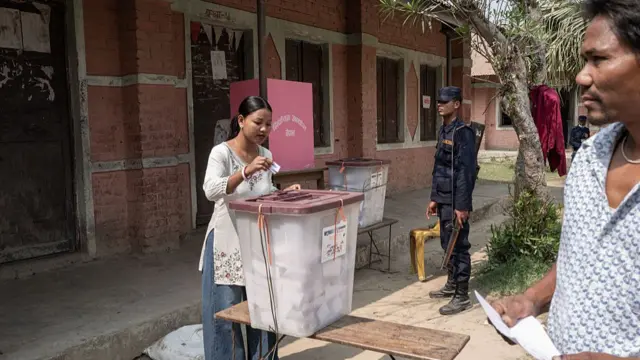 Image source, Getty Images
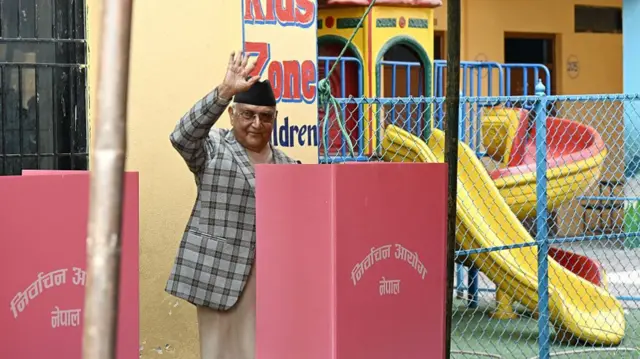
Nepali voters went to the polls on Thursday 5 March to choose a new leader
Former rapper Balendra Shah’s party is on track for a landslide victory during following last week’s elections in Nepal.
It was announced on Saturday that Shah, 35, had unseated four-time prime minister KP Sharma Oli in Jhapa 5, a traditionally safe constituency for the 74-year-old’s Communist Party of Nepal (UML).
But his was not the only victory for his Rastriya Swatantra Party (RSP).
These elections will choose 275 new representatives for Nepal’s lower house of parliament. Unlike parliamentary elections in countries like the UK, 165 of the seats are chosen directly while 110 are chosen by proportional representation (when seats in parliament correspond to total votes for each party).
Not all results are in yet, but so far Shah’s RSP has won 125 of the 165 direct-vote seats, and 58 of the 110 proportional representation seats.
In contrast, Oli’s party won eight of the direct-vote seats and 16 of the proportional representation seats at time of writing. A spokesman for the party called results “unexpected”.
But a sweeping verdict translates into high expectations, as people in Nepal look for solutions for their frustration and exhaustion, analyst Amish Raj Mulmi writes.
We’re pausing our live page here for today. If you would like to read more on this story – we’ve got you covered:
- The BBC’s South Asia correspondent, Azadeh Moshiri, explains the backdrop to Nepal’s Gen Z election
- Rap star turned politician will Nepal’s next PM, here’s what we know about Balendra (popularly known as Balen) Shah
Quiet start to a new political erapublished at 11:23 GMT
 Azadeh Moshiri
South Asia Correspondent
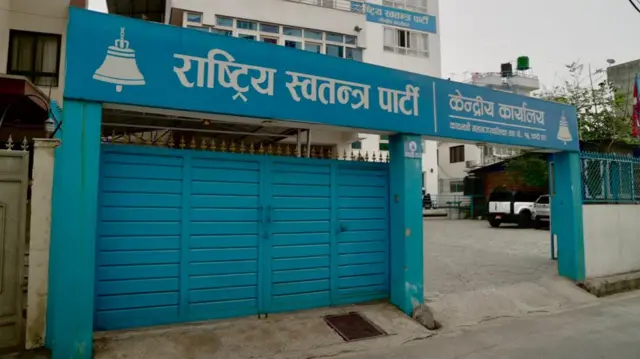
It’s a grey day in Kathmandu and eerily quiet for such an historic moment.
We’re at the RSP headquarters, and it’s practically empty.
That’s because the party has requested no celebrations, no big parades for their apparent landslide victory.
These elections only happened because of the Gen Z protests in September. In remembrance of the 77 people who died – many of them young protesters shot by police – the party has asked for a solemn start to this new political era.
The decision won’t stop some jubilant crowds from gathering across Nepal, but it isn’t the festive atmosphere you’d expect in the capital.

What’s next for Oli and his party?published at 10:57 GMT
Phanindra Dahal
BBC Nepali, Kathmandu
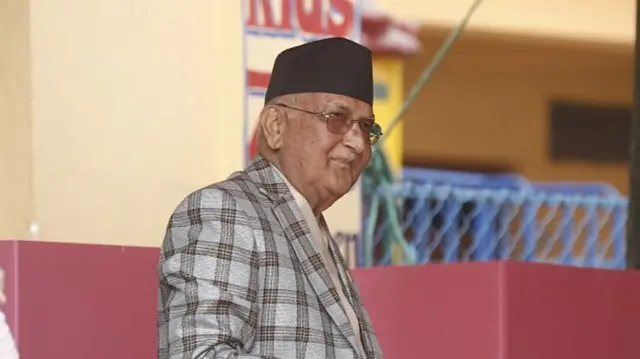 Image source, NurPhoto
Until recently, former prime minister and CPN-UML leader K P Sharma
Oli was saying he would remain active in politics for another two
decades.
The 74-year-old political leader has been a key political figure in Nepal since 1990, becoming prime minister four times.
But his defeat and the party’s worst performance in the parliamentary
elections now has raised serious questions over his leadership.
UML senior leaders have told BBC Nepali that they would make a “brutal review” and assess what went wrong.
Many leaders are saying that they are even ready to reorganise the
party leadership, if required.
CPN UML vice-chairman Raghuji Panta told BBC Nepali: “In the parliamentary system, there are many instances in
which the prime ministerial candidate or a party leader resigns in the case of
failure to secure desired outcome.
“Our own party leader Madhav Kumar Nepal had
resigned when our party did not get a satisfactory result in the 2008 Constituent
Assembly elections.
“I think it will be better if the party chairman takes a decision for himself regarding his future.”
But political analyst Rajendra Maharjan said he does not believe that Oli will voluntarily resign.
“If the UML wants to revive itself the party needs a serious transformation. I don’t see that happening under Oli,” he said.
“The UML has no option other than to reorganise the party. If they don’t do so, they will have a similar fate as the communist parties in west Bengal.”
New parliament building could start hosting sessions by end Marchpublished at 10:30 GMT
Phanindra Dahal
BBC Nepali, Kathmandu
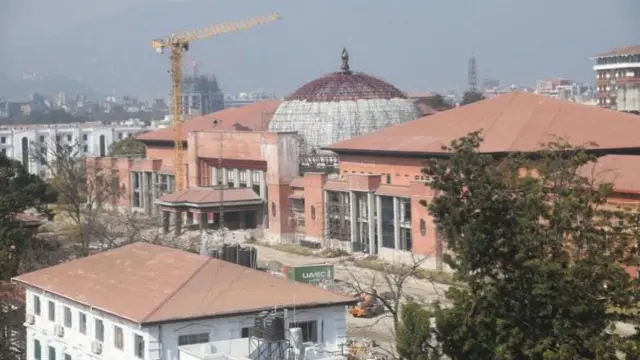
As we reported earlier, Nepal’s new parliament building is still being built – although officials have said they are hopeful it will be available to conduct House sessions by the end of this month.
Ananta
Prasad Koirala, the assistant spokesperson of the Parliament Secretariat, told BBC Nepali that the Ministry of Urban Development
and the construction team had “made a commitment to handover a
multipurpose hall and an assembly hall by 28 March”.
Koirala said they have been told that nearly 90% of the construction has been completed. “We plan to use rooms that are now in the nearby parliament secretariat premise to carry out our routine work. Only the House sessions will be conducted from the [new building].”
Construction of the new parliament building started seven years
ago. It will house both bicameral legislatures, the office of the
secretariat and the office of the parliamentary parties.
The new building was expected to be completed about three years ago, but officials said the contractor blamed the Covid-19 pandemic among other factors for the delay, receiving six deadline extensions.
Angry protesters burnt down Nepal’s previous parliament building
that operated from a hired Chinese-built convention centre during the Gen Z protests last September.
Since then the 59-member Upper
House, known as the National Assembly, has convened its sittings in a hall inside
the Parliament Secretariat located at Singhadurbar, the
country’s administrative centre.
Voter says he feels ‘optimistic’ – but also wants questions answeredpublished at 09:57 GMT
Azadeh Moshiri
South Asia Correspondent
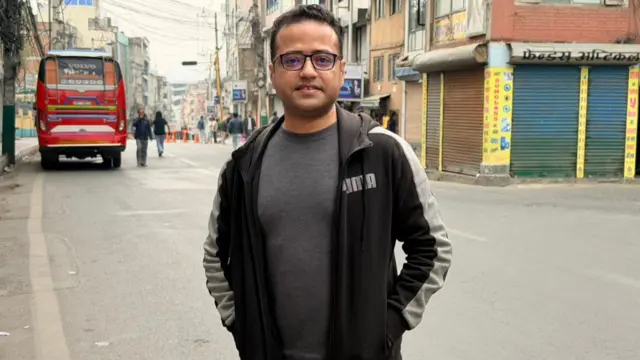
“Many Nepalis, including me, are very happy about this,” 40-year-old Raghunath Neupane told me. “I’m feeling very optimistic.”
Raghunath said seeing Balen Shah and the RSP on track to win a two-thirds majority has given him hope that Nepal will be steered by a more stable government than the fragile coalitions of the past.
“I feel Balen is capable of eradicating corruption and moving the economy forward,” he said.
But Raghunath does have some concerns.
As mayor, Balen was criticised by rights groups of using the police against street vendors in a heavy-handed manner, as he worked to keep roads clear in the capital and crack down on unlicensed businesses. Shah’s campaign has not responded to the BBC’s request for comment.
Despite feeling hopeful about the result, Raghunath would like to see Balen “control the aggression” in these alleged tactics and offer a public explanation.
Rejection at ballot box presents opportunities for Nepal’s old partiespublished at 09:31 GMT
Amish Raj Mulmi
Analyst based in Kathmandu
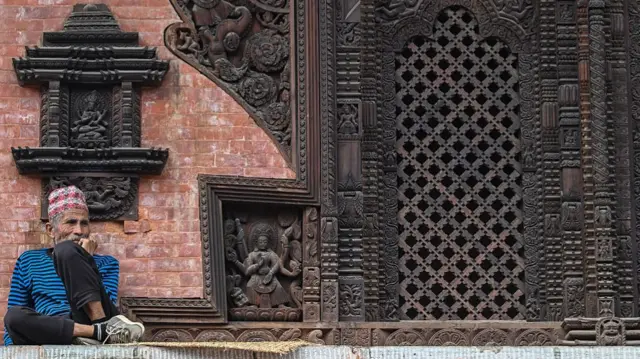 Image source, Getty Images
The primary message of Balendra Shah’s party has been good governance and no corruption, and that they represent alternative politics. The RSP gave a clear message that they are not like the old parties.
A fatigue had set in Nepali politics because of the constant machinations of the three major parties and the party systems, with very little incentive to reform or an alternative to choose from.
This election’s results could be seen as a vote against the old parties. The low turnout and high numbers for RSP suggests supporters of the old parties did not turn up at the polling booth.
For the older parties, this result could bring absolute changes to their politics and organisational structures. But it will be difficult for them to regain the trust of the people, particularly the younger Nepalis.
Nepali parties have survived worse vicissitudes, not least the three-decade-long royal autocracy and a civil war. Here is a moment for the older parties to return to the roots of the ideologies and methods to introspect about what delivered them to power over and over again – and why they were rejected this time.
Young Nepalese gain foothold in parliamentpublished at 08:55 GMT
Keshav Koirala
BBC Nepali
In the wake of the Gen Z protests, one significant development in the latest elections is that 12 candidates aged 30 and below have secured seats in the House of Representatives through the first past the post system.
Eleven are from the Rastriya Swatantra Party (RSP) that is on the verge of bagging a landslide victory in the elections. One is from the newly formed Shram Sanskriti Party.
The RSP’s Prashanta Uprety, 25, stands out as the youngest member of the newly elected House.
Two prominent women have also successfully transitioned from party-nominated seats to direct public mandates: Nisha Dangi, 29, and Shovita Gautam, 29. Both have now been re-elected through direct votes, effectively solidifying their grassroots support.
The election also produced notable “giant-killers,” such as 28-year-old Sulabh Kharel, who defeated veteran CPN-UML leader and former minister Bishnu Paudel by a wide margin. He is joined by forrmer minister Bablu Gupta, 28, who resigned from the interim government specifically to contest these elections.
Other victors include Ranju Neupane, Shivashankar Yadav and Ramjee Yadav, all aged 30. Neupane’s journey is particularly symbolic, having balanced her campaign with new motherhood. She first gained national prominence as a college student in 2017 during her run for mayor of Kathmandu with Bibeksheel Nepali, an activist group that pioneered youth socio-political awareness in the country.
This youth surge is expected to expand even further once the final proportional representation results for the remaining seats are declared, with additional young leaders from the RSP anticipated to join the legislature.
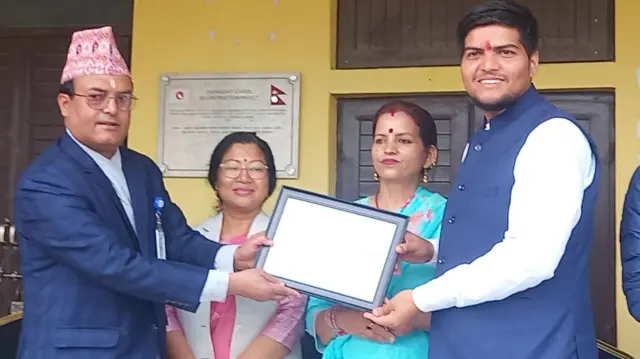 Image source, Rashtriya Samachar Samiti
Prashanta Uprety is the youngest member of the newly elected House
The only independent winner in this electionpublished at 08:18 GMT
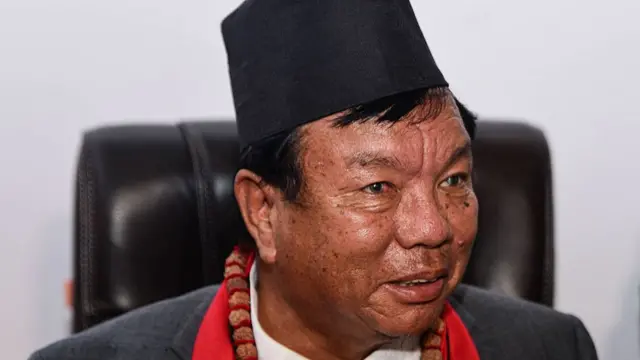 Image source, Getty Images
Mahabir Pun is known for his work in applying wireless technologies to develop remote areas of the Himalayas
Of the over 3,400 candidates in this poll, more than a third were independent.
There were five independent MPs in the previous parliament. But this time, only one independent candidate has won.
Mahabir Pun, who recently served as the minister for Education, Science, and Technology in the interim government, clinched a dominant victory with 22,850 votes in the Myagdi-1 constituency, according to the Election Commission.
He received support from the RSP, although the party’s own candidate had not formally withdrawn from the race.
Watch: What’s in the inbox for Nepal’s next government?published at 07:43 GMT
The Rastriya Swatantra Party will be celebrating their big win, but expectations on them are high.
The BBC’s Azadeh Moshiri breaks down some of the most important things they will need to get to once they start governing Nepal.
What’s in the the next Nepal government’s inbox?
‘Everyone wishes they could work in their own country’published at 07:20 GMT
Rajneesh Bhandari
BBC News
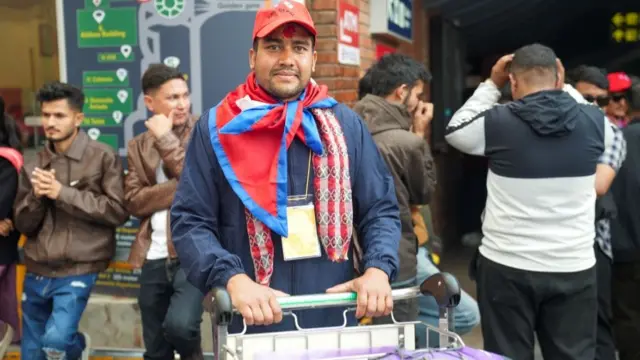 Image source, BBC/Rajneesh Bhandari
Raju Kumar Lamichhane, a 33-year-old from the Makwanpur district, spoke to me at the Tribhuvan International Airport, as he was leaving to work in South Korea after participating in the recent election.
“Everyone feels like they wish they could work in their own country; it’s not just me. Even if it couldn’t happen for me, I hope the next generation won’t have to leave like this,” he says, bidding goodbye to his family members.
Driven by a lack of domestic jobs, around 2,000 people migrate daily from Nepal, and remittances make up over a quarter of Nepal’s GDP.
Raju hopes the new government will open up closed factories and create new employment opportunities.
“No one from the lower economic class should have to go abroad. Those seeking bigger opportunities will go anyway – that’s a different matter – but no one should have to leave the country just for basic needs like food, shelter, and clothing,” he says.
How close is the RSP to a two-thirds majority?published at 06:53 GMT
Of the 275 parliamentary seats up for grabs in this election, 184 are required to secure a two-thirds majority.
Balendra Shah’s RSP has won 124 of the 165 seats decided by direct voting, as well as 58 of the 110 seats allocated through proportional representation. This means the party is now just two seats short of that threshold.
If it does manage the feat, this will mark the first time in decades that a single party has done that.
Nepal’s dual voting system means it is difficult for any one party to win a simple majority, let alone a two-thirds one.
Balen Shah’s party defeats old guard by a landslidepublished at 06:23 GMT
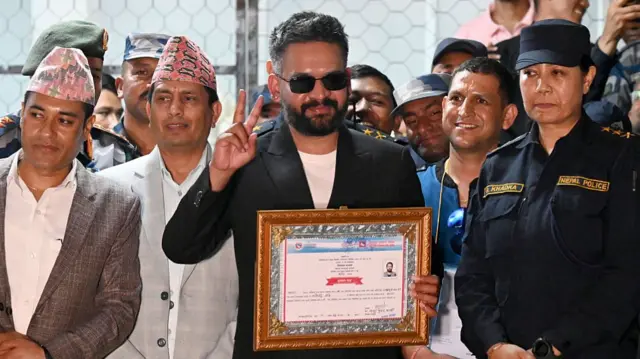 Image source, Getty Images
The party of rapper-turned-mayor Balendra Shah has crushed Nepal’s old guard in parliamentary election.
The RSP’s landslide victory shows that the issues raised by Gen Z in last year’s protests – corruption, inequality and a revolving door of elite rules – has resonated across generations, analysts say.
Here is what you need to know:
- Shah’s Rastriya Swatantra Party is on track to win a two-thirds majority, positioning the ex-mayor of Kathmandu to be the country’s next prime minister
- Shah has also defeated former prime minister KP Sharma Oli in Japha 5 constituency while another RSP candidate beat Nepali Congress president, Gagan Thapa, in Sarlahi 4
- There’s one member of Nepal’s old guard who managed to win their seat – Maoist leader-turned-prime minister Pushpa Kamal Dahal also known as Prachanda
- It’s a seismic moment in Nepali politics that gives new hope for youth protesters who marched to Kathmandu last September, writes our South Asia correspondent Azadeh Moshiri
- Shah’s supporters have taken to the streets to celebrate, ringing bells – the RSP’s election symbol
- For older politicians, the rejection by voters is a chance to return to the roots of their ideologies and think about what delivered them to power before, writes Kathmandu-based analyst Amish Raj Mulmi
- Full results are expected soon. However, there is one problem – the new parliament building is unfinished and the old one was damaged by fire during the protests
What’s next for Nepal’s new leaders?published at 06:02 GMT
Amish Raj Mulmi
Analyst based in Kathmandu

The sweeping verdict translates into high expectations from the incoming government.
The Nepali people – particularly the youth – are exhausted. Reforms are essential, both political and economic.
A majority means the RSP will be able to translate their promises into policy, but the absence of a strong opposition means vigilance will also be required on the methods and goals of such reforms.
There is also great pressure to release the Karki Commission’s report on the September protests and prosecute those guilty for the killings on 8 September, as well as to begin investigating the old political class for corruption.
The immediate challenge will be the US-Israel war with Iran, the safety of the large number of Nepali diaspora in West Asia, and managing the economic fallout of the war.
A seismic shock for Nepal’s old guardpublished at 05:47 GMT
Azadeh Moshiri
South Asia Correspondent
The numbers so far are already a seismic shock, in a country used to the same familiar faces exchanging power for decades.
It’s given hope to protesters who marched for an end to corruption last September.
Nandan, 18, was one of them, and voted for the first time. He told me this result has proven that Gen-Z voters like him are now the decision makers.
Balen, as he’s known, is set to become Nepal’s youngest ever prime minister, leading a party that is only four years old.
He has already beaten Nepal’s former leader KP Sharma Oli, a veteran politician, who was ousted by protesters.
Voters have signalled they are ready for an end to the fragile coalitions that have dominated politics in Nepal, and the beginning of a new political era.
What are the defeated old parties saying?published at 05:25 GMT
The results are “unexpected”, says Pradeep Gyawali from the CPN-UML, the party of former prime minister KP Sharma Oli.
Balen Shah beat the former prime minister in his traditional stronghold Japha 5.
“Right now, we only wish that democracy is strengthened, and that there are no compromises on national interests, and that no decisions are made on impulse at a time when geopolitical situations are becoming sensitive,” Gyawali says.
Nepali Communist Party leader Agni Sapkot says the initial results are “thought-provoking”.
The party’s senior leader Prachanda, another former PM, was one of the only members of the old guard to withstand the Balen Shah wave, defeating the RSP candidate in his constituency.
“The election has taken place, the people have voted. Don’t underestimate it now,” Sapkota added.
Congress Vice President Bishwa Prakash Sharma said: “We must move forward by accepting the results that Nepali voters have given us”. Congress’ PM bet, Gagan Thapa lost to the RSP candidate like Oli.
Balen Shah’s party promises good governancepublished at 05:02 GMT
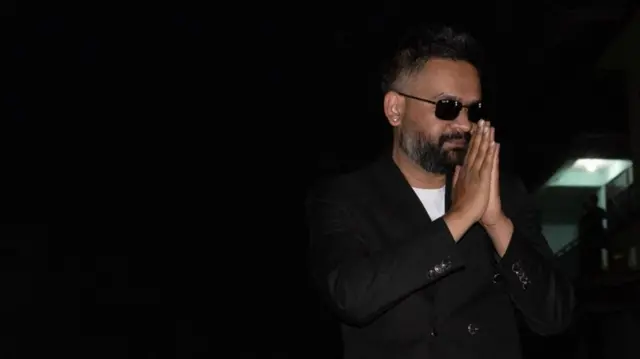 Image source, Getty Images
The RSP has reiterated its commitment to good governance with its landslide election victory all but certain.
The party’s General Secretary, Kavindra Burlakoti, has issued a statement with counting near ccompleted, with official results out as early as tomorrow.
“We move towards prosperity with the daily work of service delivery. We move forward as a democratic and welfare state by achieving economic prosperity through infrastructure development,” Burlakoti told BBC Nepali.
Court dispute holds results in one constituencypublished at 04:45 GMT
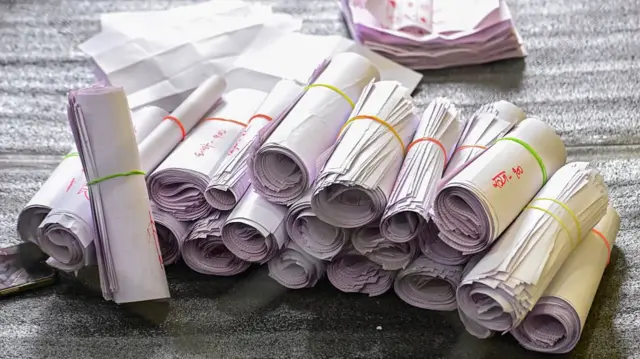 Image source, Getty Images
The Election Commission of Nepal (ECN) has stopped counting in one constituency and will withhold results until the coutry’s highest court decides on a dispute.
Rastriya Swatantra Party candidate Kishori Saha was disqualified in Dhanusha-1 after it was found that he was blacklisted by the Credit Information Centre, the country’s watchdog on credit scores.
However, Saha still got votes as the ballots had been printed before the disqualification. The ECN said votes cast for Saha are void and now the case has been forwarded to the Supreme Court. The votes counted so far show that Saha was well in the lead.
Nepal has a new government but no building for them to sit inpublished at 04:27 GMT
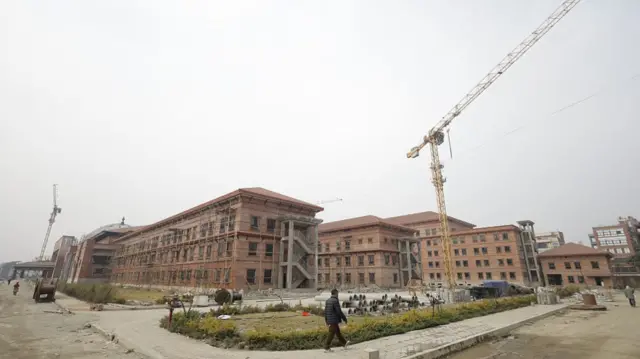 Image source, Getty Images
The full election results will be official by tomorrow but one fundamental question confronts the 265 members of the new parliament – where will they hold office?
The parliament building was set on fire at the height of Gen Z protests last year. However, construction on the new structure meant to replace it has not been completed.
According to the Kathmandu Post, the Ministry of Urban Development has given assurances the building will be ready by mid-March. It was originally due to be completed last October.
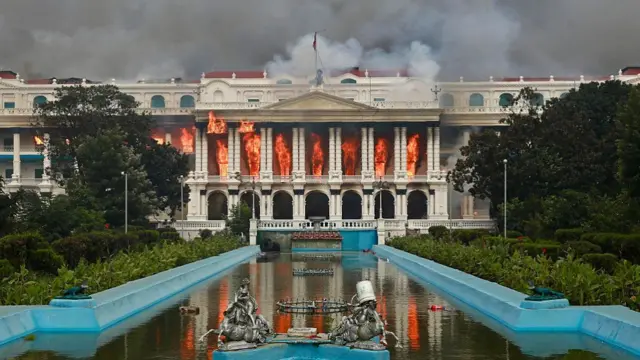 Image source, Getty Images
Election Commissioner on why the vote count was faster this yearpublished at 04:11 GMT
Rajneesh Bhandari
BBC
Better deployment of staff and “good preparation” are responsible for the speedier-than-usual vote count at this election, Nepal’s acting chief election commissioner says.
Ram Prasad Bhandari told the BBC the commission had delegated authority to local election officers.
“Our management, deployment of staff, and good preparation are the reasons for the early results,” he said. “All the results will be out by tomorrow evening.”
During the last election in 2022, it took nearly two weeks for results to be released. Collecting ballot boxes can be challenging in Nepal, where more than 80% of the terrain is mountainous.
As of Monday, the counting for the first-past-the-post system is almost complete, with only three constituencies remaining to be hold.
However, the final declaration for the district of Dhanusa is on hold pending a court decision expected later on Monday.
Bhandari also confirmed that 60% of the counting for the proportional representation system, which determines the final makeup of the 275-seat House of Representatives, was complete with the remaining ballots expected to be processed in the next 24 hours.
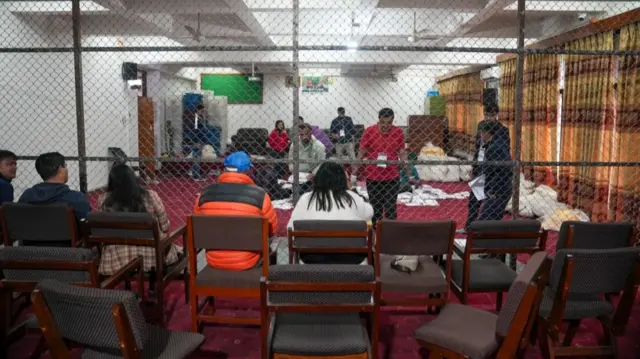 Image source, Rajneesh Bhandari
Vote counting in the city of Lalitpur on Monday morning
What’s next for Nepal’s old guard?published at 03:54 GMT
Amish Raj Mulmi
analyst based in Kathmandu
Former PM KP Sharma Oli has lost the Jhapa 5 seat to Balendra Shah
For Nepal’s older parties, this verdict can bring absolute changes to their politics and organisational structures.
But it will be difficult for them to regain the trust of the people, particularly the younger Nepalis.
But Nepali parties have survived worse vicissitudes, not least the three-decade-long royal autocracy and a civil war.
Here is a moment for the older parties to return to the roots of the ideologies and methods to introspect about what delivered them to power over and over again (and why they were rejected).
Nepalese rapper-turned-politician on track for landslide election victorypublished at 11:58 GMT
Image source, Getty Images
Nepali voters went to the polls on Thursday 5 March to choose a new leader
Former rapper Balendra Shah’s party is on track for a landslide victory during following last week’s elections in Nepal.
It was announced on Saturday that Shah, 35, had unseated four-time prime minister KP Sharma Oli in Jhapa 5, a traditionally safe constituency for the 74-year-old’s Communist Party of Nepal (UML).
But his was not the only victory for his Rastriya Swatantra Party (RSP).
These elections will choose 275 new representatives for Nepal’s lower house of parliament. Unlike parliamentary elections in countries like the UK, 165 of the seats are chosen directly while 110 are chosen by proportional representation (when seats in parliament correspond to total votes for each party).
Not all results are in yet, but so far Shah’s RSP has won 125 of the 165 direct-vote seats, and 58 of the 110 proportional representation seats.
In contrast, Oli’s party won eight of the direct-vote seats and 16 of the proportional representation seats at time of writing. A spokesman for the party called results “unexpected”.
But a sweeping verdict translates into high expectations, as people in Nepal look for solutions for their frustration and exhaustion, analyst Amish Raj Mulmi writes.
We’re pausing our live page here for today. If you would like to read more on this story – we’ve got you covered:
- The BBC’s South Asia correspondent, Azadeh Moshiri, explains the backdrop to Nepal’s Gen Z election
- Rap star turned politician will Nepal’s next PM, here’s what we know about Balendra (popularly known as Balen) Shah
Quiet start to a new political erapublished at 11:23 GMT
Azadeh Moshiri
South Asia Correspondent
It’s a grey day in Kathmandu and eerily quiet for such an historic moment.
We’re at the RSP headquarters, and it’s practically empty.
That’s because the party has requested no celebrations, no big parades for their apparent landslide victory.
These elections only happened because of the Gen Z protests in September. In remembrance of the 77 people who died – many of them young protesters shot by police – the party has asked for a solemn start to this new political era.
The decision won’t stop some jubilant crowds from gathering across Nepal, but it isn’t the festive atmosphere you’d expect in the capital.
What’s next for Oli and his party?published at 10:57 GMT
Phanindra Dahal
BBC Nepali, Kathmandu
Image source, NurPhoto
Until recently, former prime minister and CPN-UML leader K P Sharma
Oli was saying he would remain active in politics for another two
decades.
The 74-year-old political leader has been a key political figure in Nepal since 1990, becoming prime minister four times.
But his defeat and the party’s worst performance in the parliamentary
elections now has raised serious questions over his leadership.
UML senior leaders have told BBC Nepali that they would make a “brutal review” and assess what went wrong.
Many leaders are saying that they are even ready to reorganise the
party leadership, if required.
CPN UML vice-chairman Raghuji Panta told BBC Nepali: “In the parliamentary system, there are many instances in
which the prime ministerial candidate or a party leader resigns in the case of
failure to secure desired outcome.
“Our own party leader Madhav Kumar Nepal had
resigned when our party did not get a satisfactory result in the 2008 Constituent
Assembly elections.
“I think it will be better if the party chairman takes a decision for himself regarding his future.”
But political analyst Rajendra Maharjan said he does not believe that Oli will voluntarily resign.
“If the UML wants to revive itself the party needs a serious transformation. I don’t see that happening under Oli,” he said.
“The UML has no option other than to reorganise the party. If they don’t do so, they will have a similar fate as the communist parties in west Bengal.”
New parliament building could start hosting sessions by end Marchpublished at 10:30 GMT
Phanindra Dahal
BBC Nepali, Kathmandu
As we reported earlier, Nepal’s new parliament building is still being built – although officials have said they are hopeful it will be available to conduct House sessions by the end of this month.
Ananta
Prasad Koirala, the assistant spokesperson of the Parliament Secretariat, told BBC Nepali that the Ministry of Urban Development
and the construction team had “made a commitment to handover a
multipurpose hall and an assembly hall by 28 March”.
Koirala said they have been told that nearly 90% of the construction has been completed. “We plan to use rooms that are now in the nearby parliament secretariat premise to carry out our routine work. Only the House sessions will be conducted from the [new building].”
Construction of the new parliament building started seven years
ago. It will house both bicameral legislatures, the office of the
secretariat and the office of the parliamentary parties.
The new building was expected to be completed about three years ago, but officials said the contractor blamed the Covid-19 pandemic among other factors for the delay, receiving six deadline extensions.
Angry protesters burnt down Nepal’s previous parliament building
that operated from a hired Chinese-built convention centre during the Gen Z protests last September.
Since then the 59-member Upper
House, known as the National Assembly, has convened its sittings in a hall inside
the Parliament Secretariat located at Singhadurbar, the
country’s administrative centre.
Voter says he feels ‘optimistic’ – but also wants questions answeredpublished at 09:57 GMT
Azadeh Moshiri
South Asia Correspondent
“Many Nepalis, including me, are very happy about this,” 40-year-old Raghunath Neupane told me. “I’m feeling very optimistic.”
Raghunath said seeing Balen Shah and the RSP on track to win a two-thirds majority has given him hope that Nepal will be steered by a more stable government than the fragile coalitions of the past.
“I feel Balen is capable of eradicating corruption and moving the economy forward,” he said.
But Raghunath does have some concerns.
As mayor, Balen was criticised by rights groups of using the police against street vendors in a heavy-handed manner, as he worked to keep roads clear in the capital and crack down on unlicensed businesses. Shah’s campaign has not responded to the BBC’s request for comment.
Despite feeling hopeful about the result, Raghunath would like to see Balen “control the aggression” in these alleged tactics and offer a public explanation.
Rejection at ballot box presents opportunities for Nepal’s old partiespublished at 09:31 GMT
Amish Raj Mulmi
Analyst based in Kathmandu
Image source, Getty Images
The primary message of Balendra Shah’s party has been good governance and no corruption, and that they represent alternative politics. The RSP gave a clear message that they are not like the old parties.
A fatigue had set in Nepali politics because of the constant machinations of the three major parties and the party systems, with very little incentive to reform or an alternative to choose from.
This election’s results could be seen as a vote against the old parties. The low turnout and high numbers for RSP suggests supporters of the old parties did not turn up at the polling booth.
For the older parties, this result could bring absolute changes to their politics and organisational structures. But it will be difficult for them to regain the trust of the people, particularly the younger Nepalis.
Nepali parties have survived worse vicissitudes, not least the three-decade-long royal autocracy and a civil war. Here is a moment for the older parties to return to the roots of the ideologies and methods to introspect about what delivered them to power over and over again – and why they were rejected this time.
Young Nepalese gain foothold in parliamentpublished at 08:55 GMT
Keshav Koirala
BBC Nepali
In the wake of the Gen Z protests, one significant development in the latest elections is that 12 candidates aged 30 and below have secured seats in the House of Representatives through the first past the post system.
Eleven are from the Rastriya Swatantra Party (RSP) that is on the verge of bagging a landslide victory in the elections. One is from the newly formed Shram Sanskriti Party.
The RSP’s Prashanta Uprety, 25, stands out as the youngest member of the newly elected House.
Two prominent women have also successfully transitioned from party-nominated seats to direct public mandates: Nisha Dangi, 29, and Shovita Gautam, 29. Both have now been re-elected through direct votes, effectively solidifying their grassroots support.
The election also produced notable “giant-killers,” such as 28-year-old Sulabh Kharel, who defeated veteran CPN-UML leader and former minister Bishnu Paudel by a wide margin. He is joined by forrmer minister Bablu Gupta, 28, who resigned from the interim government specifically to contest these elections.
Other victors include Ranju Neupane, Shivashankar Yadav and Ramjee Yadav, all aged 30. Neupane’s journey is particularly symbolic, having balanced her campaign with new motherhood. She first gained national prominence as a college student in 2017 during her run for mayor of Kathmandu with Bibeksheel Nepali, an activist group that pioneered youth socio-political awareness in the country.
This youth surge is expected to expand even further once the final proportional representation results for the remaining seats are declared, with additional young leaders from the RSP anticipated to join the legislature.
Image source, Rashtriya Samachar Samiti
Prashanta Uprety is the youngest member of the newly elected House
The only independent winner in this electionpublished at 08:18 GMT
Image source, Getty Images
Mahabir Pun is known for his work in applying wireless technologies to develop remote areas of the Himalayas
Of the over 3,400 candidates in this poll, more than a third were independent.
There were five independent MPs in the previous parliament. But this time, only one independent candidate has won.
Mahabir Pun, who recently served as the minister for Education, Science, and Technology in the interim government, clinched a dominant victory with 22,850 votes in the Myagdi-1 constituency, according to the Election Commission.
He received support from the RSP, although the party’s own candidate had not formally withdrawn from the race.
Watch: What’s in the inbox for Nepal’s next government?published at 07:43 GMT
The Rastriya Swatantra Party will be celebrating their big win, but expectations on them are high.
The BBC’s Azadeh Moshiri breaks down some of the most important things they will need to get to once they start governing Nepal.
What’s in the the next Nepal government’s inbox?
‘Everyone wishes they could work in their own country’published at 07:20 GMT
Rajneesh Bhandari
BBC News
Image source, BBC/Rajneesh Bhandari
Raju Kumar Lamichhane, a 33-year-old from the Makwanpur district, spoke to me at the Tribhuvan International Airport, as he was leaving to work in South Korea after participating in the recent election.
“Everyone feels like they wish they could work in their own country; it’s not just me. Even if it couldn’t happen for me, I hope the next generation won’t have to leave like this,” he says, bidding goodbye to his family members.
Driven by a lack of domestic jobs, around 2,000 people migrate daily from Nepal, and remittances make up over a quarter of Nepal’s GDP.
Raju hopes the new government will open up closed factories and create new employment opportunities.
“No one from the lower economic class should have to go abroad. Those seeking bigger opportunities will go anyway – that’s a different matter – but no one should have to leave the country just for basic needs like food, shelter, and clothing,” he says.
How close is the RSP to a two-thirds majority?published at 06:53 GMT
Of the 275 parliamentary seats up for grabs in this election, 184 are required to secure a two-thirds majority.
Balendra Shah’s RSP has won 124 of the 165 seats decided by direct voting, as well as 58 of the 110 seats allocated through proportional representation. This means the party is now just two seats short of that threshold.
If it does manage the feat, this will mark the first time in decades that a single party has done that.
Nepal’s dual voting system means it is difficult for any one party to win a simple majority, let alone a two-thirds one.
Balen Shah’s party defeats old guard by a landslidepublished at 06:23 GMT
Image source, Getty Images
The party of rapper-turned-mayor Balendra Shah has crushed Nepal’s old guard in parliamentary election.
The RSP’s landslide victory shows that the issues raised by Gen Z in last year’s protests – corruption, inequality and a revolving door of elite rules – has resonated across generations, analysts say.
Here is what you need to know:
- Shah’s Rastriya Swatantra Party is on track to win a two-thirds majority, positioning the ex-mayor of Kathmandu to be the country’s next prime minister
- Shah has also defeated former prime minister KP Sharma Oli in Japha 5 constituency while another RSP candidate beat Nepali Congress president, Gagan Thapa, in Sarlahi 4
- There’s one member of Nepal’s old guard who managed to win their seat – Maoist leader-turned-prime minister Pushpa Kamal Dahal also known as Prachanda
- It’s a seismic moment in Nepali politics that gives new hope for youth protesters who marched to Kathmandu last September, writes our South Asia correspondent Azadeh Moshiri
- Shah’s supporters have taken to the streets to celebrate, ringing bells – the RSP’s election symbol
- For older politicians, the rejection by voters is a chance to return to the roots of their ideologies and think about what delivered them to power before, writes Kathmandu-based analyst Amish Raj Mulmi
- Full results are expected soon. However, there is one problem – the new parliament building is unfinished and the old one was damaged by fire during the protests
What’s next for Nepal’s new leaders?published at 06:02 GMT
Amish Raj Mulmi
Analyst based in Kathmandu
The sweeping verdict translates into high expectations from the incoming government.
The Nepali people – particularly the youth – are exhausted. Reforms are essential, both political and economic.
A majority means the RSP will be able to translate their promises into policy, but the absence of a strong opposition means vigilance will also be required on the methods and goals of such reforms.
There is also great pressure to release the Karki Commission’s report on the September protests and prosecute those guilty for the killings on 8 September, as well as to begin investigating the old political class for corruption.
The immediate challenge will be the US-Israel war with Iran, the safety of the large number of Nepali diaspora in West Asia, and managing the economic fallout of the war.
A seismic shock for Nepal’s old guardpublished at 05:47 GMT
Azadeh Moshiri
South Asia Correspondent
The numbers so far are already a seismic shock, in a country used to the same familiar faces exchanging power for decades.
It’s given hope to protesters who marched for an end to corruption last September.
Nandan, 18, was one of them, and voted for the first time. He told me this result has proven that Gen-Z voters like him are now the decision makers.
Balen, as he’s known, is set to become Nepal’s youngest ever prime minister, leading a party that is only four years old.
He has already beaten Nepal’s former leader KP Sharma Oli, a veteran politician, who was ousted by protesters.
Voters have signalled they are ready for an end to the fragile coalitions that have dominated politics in Nepal, and the beginning of a new political era.
What are the defeated old parties saying?published at 05:25 GMT
The results are “unexpected”, says Pradeep Gyawali from the CPN-UML, the party of former prime minister KP Sharma Oli.
Balen Shah beat the former prime minister in his traditional stronghold Japha 5.
“Right now, we only wish that democracy is strengthened, and that there are no compromises on national interests, and that no decisions are made on impulse at a time when geopolitical situations are becoming sensitive,” Gyawali says.
Nepali Communist Party leader Agni Sapkot says the initial results are “thought-provoking”.
The party’s senior leader Prachanda, another former PM, was one of the only members of the old guard to withstand the Balen Shah wave, defeating the RSP candidate in his constituency.
“The election has taken place, the people have voted. Don’t underestimate it now,” Sapkota added.
Congress Vice President Bishwa Prakash Sharma said: “We must move forward by accepting the results that Nepali voters have given us”. Congress’ PM bet, Gagan Thapa lost to the RSP candidate like Oli.
Balen Shah’s party promises good governancepublished at 05:02 GMT
Image source, Getty Images
The RSP has reiterated its commitment to good governance with its landslide election victory all but certain.
The party’s General Secretary, Kavindra Burlakoti, has issued a statement with counting near ccompleted, with official results out as early as tomorrow.
“We move towards prosperity with the daily work of service delivery. We move forward as a democratic and welfare state by achieving economic prosperity through infrastructure development,” Burlakoti told BBC Nepali.
Court dispute holds results in one constituencypublished at 04:45 GMT
Image source, Getty Images
The Election Commission of Nepal (ECN) has stopped counting in one constituency and will withhold results until the coutry’s highest court decides on a dispute.
Rastriya Swatantra Party candidate Kishori Saha was disqualified in Dhanusha-1 after it was found that he was blacklisted by the Credit Information Centre, the country’s watchdog on credit scores.
However, Saha still got votes as the ballots had been printed before the disqualification. The ECN said votes cast for Saha are void and now the case has been forwarded to the Supreme Court. The votes counted so far show that Saha was well in the lead.
Nepal has a new government but no building for them to sit inpublished at 04:27 GMT
Image source, Getty Images
The full election results will be official by tomorrow but one fundamental question confronts the 265 members of the new parliament – where will they hold office?
The parliament building was set on fire at the height of Gen Z protests last year. However, construction on the new structure meant to replace it has not been completed.
According to the Kathmandu Post, the Ministry of Urban Development has given assurances the building will be ready by mid-March. It was originally due to be completed last October.
Image source, Getty Images
Election Commissioner on why the vote count was faster this yearpublished at 04:11 GMT
Rajneesh Bhandari
BBC
Better deployment of staff and “good preparation” are responsible for the speedier-than-usual vote count at this election, Nepal’s acting chief election commissioner says.
Ram Prasad Bhandari told the BBC the commission had delegated authority to local election officers.
“Our management, deployment of staff, and good preparation are the reasons for the early results,” he said. “All the results will be out by tomorrow evening.”
During the last election in 2022, it took nearly two weeks for results to be released. Collecting ballot boxes can be challenging in Nepal, where more than 80% of the terrain is mountainous.
As of Monday, the counting for the first-past-the-post system is almost complete, with only three constituencies remaining to be hold.
However, the final declaration for the district of Dhanusa is on hold pending a court decision expected later on Monday.
Bhandari also confirmed that 60% of the counting for the proportional representation system, which determines the final makeup of the 275-seat House of Representatives, was complete with the remaining ballots expected to be processed in the next 24 hours.
Image source, Rajneesh Bhandari
Vote counting in the city of Lalitpur on Monday morning
What’s next for Nepal’s old guard?published at 03:54 GMT
Amish Raj Mulmi
analyst based in Kathmandu
Former PM KP Sharma Oli has lost the Jhapa 5 seat to Balendra Shah
For Nepal’s older parties, this verdict can bring absolute changes to their politics and organisational structures.
But it will be difficult for them to regain the trust of the people, particularly the younger Nepalis.
But Nepali parties have survived worse vicissitudes, not least the three-decade-long royal autocracy and a civil war.
Here is a moment for the older parties to return to the roots of the ideologies and methods to introspect about what delivered them to power over and over again (and why they were rejected).