



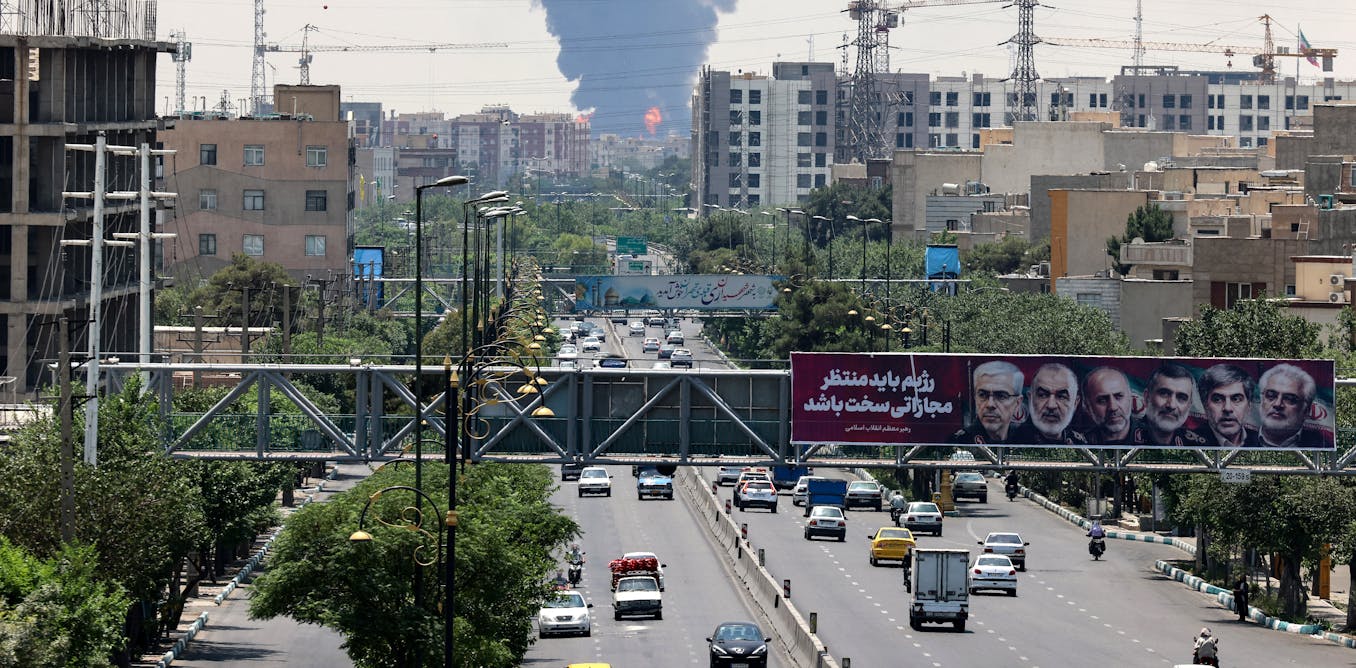
At least 14 nuclear scientists are believed to be among those killed in Israel’s Operation Rising Lion, launched on June 13, 2025, ostensibly to destroy or degrade Iran’s nuclear program and military capabilities.
Deliberately targeting scientists in this way aims to disrupt Iran’s knowledge base and continuity in nuclear expertise. Among those assassinated were Mohammad Mehdi Tehranchi, a theoretical physicist and head of Iran’s Islamic Azad University, and Fereydoun Abbasi-Davani, a nuclear engineer who led Iran’s Atomic Energy Organization.
Collectively, these experts in physics and engineering were potential successors to Mohsen Fakhrizadeh, widely regarded as the architect of the Iranian nuclear program, who was assassinated in a November 2020 attack many blame on Israel.
As two political scientists writing a book about state targeting of scientists as a counterproliferation tool, we understand well that nuclear scientists have been targeted since the nuclear age began. We have gathered data on nearly 100 instances of what we call “scientist targeting” from 1944 through 2025.
The most recent assassination campaign against Iranian scientists is different from many of the earlier episodes in a few key ways. Israel’s recent attack targeted multiple nuclear experts and took place simultaneously with military force to destroy Iran’s nuclear facilities, air defenses and energy infrastructure. Also, unlike previous covert operations, Israel immediately claimed responsibility for the assassinations.
But our research indicates that targeting scientists may not be effective for counterproliferation. While removing individual expertise may delay nuclear acquisition, targeting alone is unlikely to destroy a program outright and could even increase a country’s desire for nuclear weapons. Further, targeting scientists may trigger blowback given concerns regarding legality and morality.
A policy with a long history
Targeting nuclear scientists began during World War II when Allied and Soviet forces raced to capture Nazi scientists, degrade Adolf Hitler’s ability to build a nuclear bomb and use their expertise to advance the U.S. and Soviet nuclear programs.
In our data set, we classified “targeting” as cases in which scientists were captured, threatened, injured or killed as nations tried to prevent adversaries from acquiring weapons of mass destruction. Over time, at least four countries have targeted scientists working on nine national nuclear programs.
The United States and Israel have allegedly carried out the most attacks on nuclear scientists. But the United Kingdom and Soviet Union have also been behind such attacks.
Meanwhile, scientists working for the Egyptian, Iranian and Iraqi nuclear programs have been the most frequent targets since 1950. Since 2007 and prior to the current Israeli operation, 10 scientists involved in the Iranian nuclear program were killed in attacks. Other countries’ nationals have also been targeted: In 1980, Mossad, Israel’s intelligence service, allegedly bombed Italian engineer Mario Fiorelli’s home and his firm, SNIA Techint, as a warning to Europeans involved in the Iraqi nuclear project.
Given this history, the fact that Israel attacked Iran’s nuclear program is not itself surprising. Indeed, it has been a strategic goal of successive Israeli prime ministers to prevent Iran from acquiring nuclear weapons, and experts had been warning of the increased likelihood of an Israeli military operation since mid-2024, due to regional dynamics and Iranian nuclear development.

Scott Peterson/Getty Images
By then, the balance of power in the Middle East had changed dramatically. Israel systematically degraded the leadership and infrastructure of Iranian proxies Hamas and Hezbollah. It later destroyed Iranian air defenses around Tehran and near key nuclear installations. The subsequent fall of Syria’s Assad regime cost Tehran another long-standing ally. Together, these developments have significantly weakened Iran, leaving it vulnerable to external attack and stripped of its once-feared proxy network, which had been expected to retaliate on its behalf in the event of hostilities.
With its proxy “axis of resistance” defanged and conventional military capacity degraded, Iranian leadership may have thought that expanding its enrichment capability was its best bet going forward.
And in the months leading up to Israel’s recent attack, Iran expanded its nuclear production capacity, moving beyond 60% uranium enrichment, a technical step just short of weapons-grade material. During Donald Trump’s first term, the president withdrew the U.S. from a multilateral nonproliferation agreement aimed at curbing Iran’s nuclear program. After being reelected, Trump appeared to change tack by pursuing new diplomacy with Iran, but those talks have so far failed to deliver an agreement – and may be put on hold for the foreseeable future amid the war.
Most recently, the International Atomic Energy Agency board of governors declared Iran in non-compliance with its nuclear-nonproliferation obligations. In response, Iran announced it was further expanding its enrichment capacity by adding advanced centrifuge technology and a third enrichment site.
Even if the international community anticipated the broader attack on Iran, characteristics of the targeting itself are surprising. Historically, states have covertly targeted individual scientists. But the recent multiple-scientist attack occurred openly, with Israel taking responsibility, publicly indicating the attacks’ purpose. Further, while it is not new for a country to use multiple counter-proliferation tools against an adversary over time, that Israel is using both preventive military force against infrastructure and targeting scientists at once is atypical.
Additionally, such attacks against scientists are historically lower tech and low cost, with death or injury stemming from gunmen, car bombs or accidents. In fact, Abbasi – who was killed in the most recent attacks – survived a 2010 car bombing in Tehran. There are outliers, however, including the Fakhrizadeh assassination, which featured a remotely operated machine gun smuggled into Iranian territory.
Israel’s logic in going after scientists
Why target nuclear scientists?
In foreign policy, there are numerous tools available if one state aims to prevent another state from acquiring nuclear weapons. Alongside targeting scientists, there are sanctions, diplomacy, cyberattacks and military force.
Targeting scientists may remove critical scientific expertise and impose costs that increase the difficulty of building nuclear weapons. Proponents argue that targeting these experts may undermine a state’s efforts, deter it from continuing nuclear developments and signal to others the perils of supporting nuclear proliferation.
Countries that target scientists therefore believe that doing so is an effective way to degrade an adversary’s nuclear program. Indeed, the Israel Defense Forces described the most recent attacks as “a significant blow to the regime’s ability to acquire weapons of mass destruction.”
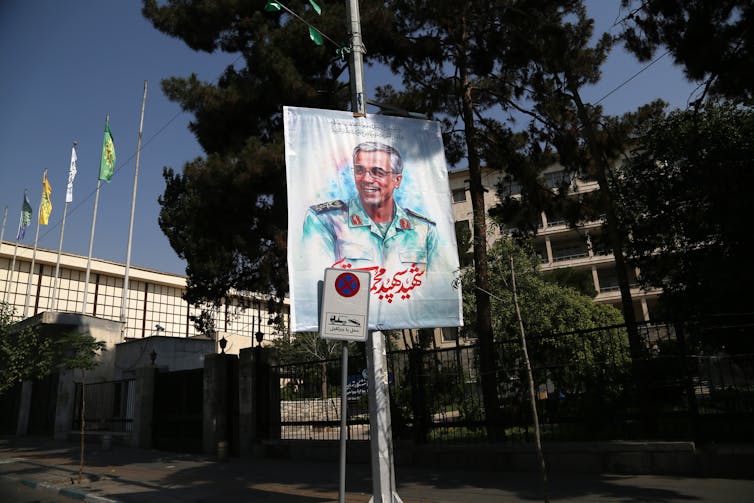
Fatemeh Bahrami/Anadolu via Getty Images
Despite Israel’s focus on scientists as sources of critical knowledge, there may be thousands more working inside Iran, calling into question the efficacy of targeting them. Further, there are legal, ethical and moral concerns over targeting scientists.
Moreover, it is a risky option that may fail to disrupt an enemy nuclear program while sparking public outrage and calls for retaliation. This is especially the case if scientists, often regarded as civilians, are elevated as martyrs.
Targeting campaigns may, as a result, reinforce domestic support for a government, which could then redouble efforts toward nuclear development.
Regardless of whether targeting scientists is an effective counter-proliferation tool, it has been around since the start of the nuclear age – and will likely persist as part of the foreign policy toolkit for states aiming to prevent proliferation. In the case of the current Israeli conflict with Iran and its targeting of nuclear scientists, we expect the tactic to continue for the duration of the war and beyond.
At least 14 nuclear scientists are believed to be among those killed in Israel’s Operation Rising Lion, launched on June 13, 2025, ostensibly to destroy or degrade Iran’s nuclear program and military capabilities.
Deliberately targeting scientists in this way aims to disrupt Iran’s knowledge base and continuity in nuclear expertise. Among those assassinated were Mohammad Mehdi Tehranchi, a theoretical physicist and head of Iran’s Islamic Azad University, and Fereydoun Abbasi-Davani, a nuclear engineer who led Iran’s Atomic Energy Organization.
Collectively, these experts in physics and engineering were potential successors to Mohsen Fakhrizadeh, widely regarded as the architect of the Iranian nuclear program, who was assassinated in a November 2020 attack many blame on Israel.
As two political scientists writing a book about state targeting of scientists as a counterproliferation tool, we understand well that nuclear scientists have been targeted since the nuclear age began. We have gathered data on nearly 100 instances of what we call “scientist targeting” from 1944 through 2025.
The most recent assassination campaign against Iranian scientists is different from many of the earlier episodes in a few key ways. Israel’s recent attack targeted multiple nuclear experts and took place simultaneously with military force to destroy Iran’s nuclear facilities, air defenses and energy infrastructure. Also, unlike previous covert operations, Israel immediately claimed responsibility for the assassinations.
But our research indicates that targeting scientists may not be effective for counterproliferation. While removing individual expertise may delay nuclear acquisition, targeting alone is unlikely to destroy a program outright and could even increase a country’s desire for nuclear weapons. Further, targeting scientists may trigger blowback given concerns regarding legality and morality.
A policy with a long history
Targeting nuclear scientists began during World War II when Allied and Soviet forces raced to capture Nazi scientists, degrade Adolf Hitler’s ability to build a nuclear bomb and use their expertise to advance the U.S. and Soviet nuclear programs.
In our data set, we classified “targeting” as cases in which scientists were captured, threatened, injured or killed as nations tried to prevent adversaries from acquiring weapons of mass destruction. Over time, at least four countries have targeted scientists working on nine national nuclear programs.
The United States and Israel have allegedly carried out the most attacks on nuclear scientists. But the United Kingdom and Soviet Union have also been behind such attacks.
Meanwhile, scientists working for the Egyptian, Iranian and Iraqi nuclear programs have been the most frequent targets since 1950. Since 2007 and prior to the current Israeli operation, 10 scientists involved in the Iranian nuclear program were killed in attacks. Other countries’ nationals have also been targeted: In 1980, Mossad, Israel’s intelligence service, allegedly bombed Italian engineer Mario Fiorelli’s home and his firm, SNIA Techint, as a warning to Europeans involved in the Iraqi nuclear project.
Given this history, the fact that Israel attacked Iran’s nuclear program is not itself surprising. Indeed, it has been a strategic goal of successive Israeli prime ministers to prevent Iran from acquiring nuclear weapons, and experts had been warning of the increased likelihood of an Israeli military operation since mid-2024, due to regional dynamics and Iranian nuclear development.
Scott Peterson/Getty Images
By then, the balance of power in the Middle East had changed dramatically. Israel systematically degraded the leadership and infrastructure of Iranian proxies Hamas and Hezbollah. It later destroyed Iranian air defenses around Tehran and near key nuclear installations. The subsequent fall of Syria’s Assad regime cost Tehran another long-standing ally. Together, these developments have significantly weakened Iran, leaving it vulnerable to external attack and stripped of its once-feared proxy network, which had been expected to retaliate on its behalf in the event of hostilities.
With its proxy “axis of resistance” defanged and conventional military capacity degraded, Iranian leadership may have thought that expanding its enrichment capability was its best bet going forward.
And in the months leading up to Israel’s recent attack, Iran expanded its nuclear production capacity, moving beyond 60% uranium enrichment, a technical step just short of weapons-grade material. During Donald Trump’s first term, the president withdrew the U.S. from a multilateral nonproliferation agreement aimed at curbing Iran’s nuclear program. After being reelected, Trump appeared to change tack by pursuing new diplomacy with Iran, but those talks have so far failed to deliver an agreement – and may be put on hold for the foreseeable future amid the war.
Most recently, the International Atomic Energy Agency board of governors declared Iran in non-compliance with its nuclear-nonproliferation obligations. In response, Iran announced it was further expanding its enrichment capacity by adding advanced centrifuge technology and a third enrichment site.
Even if the international community anticipated the broader attack on Iran, characteristics of the targeting itself are surprising. Historically, states have covertly targeted individual scientists. But the recent multiple-scientist attack occurred openly, with Israel taking responsibility, publicly indicating the attacks’ purpose. Further, while it is not new for a country to use multiple counter-proliferation tools against an adversary over time, that Israel is using both preventive military force against infrastructure and targeting scientists at once is atypical.
Additionally, such attacks against scientists are historically lower tech and low cost, with death or injury stemming from gunmen, car bombs or accidents. In fact, Abbasi – who was killed in the most recent attacks – survived a 2010 car bombing in Tehran. There are outliers, however, including the Fakhrizadeh assassination, which featured a remotely operated machine gun smuggled into Iranian territory.
Israel’s logic in going after scientists
Why target nuclear scientists?
In foreign policy, there are numerous tools available if one state aims to prevent another state from acquiring nuclear weapons. Alongside targeting scientists, there are sanctions, diplomacy, cyberattacks and military force.
Targeting scientists may remove critical scientific expertise and impose costs that increase the difficulty of building nuclear weapons. Proponents argue that targeting these experts may undermine a state’s efforts, deter it from continuing nuclear developments and signal to others the perils of supporting nuclear proliferation.
Countries that target scientists therefore believe that doing so is an effective way to degrade an adversary’s nuclear program. Indeed, the Israel Defense Forces described the most recent attacks as “a significant blow to the regime’s ability to acquire weapons of mass destruction.”
Fatemeh Bahrami/Anadolu via Getty Images
Despite Israel’s focus on scientists as sources of critical knowledge, there may be thousands more working inside Iran, calling into question the efficacy of targeting them. Further, there are legal, ethical and moral concerns over targeting scientists.
Moreover, it is a risky option that may fail to disrupt an enemy nuclear program while sparking public outrage and calls for retaliation. This is especially the case if scientists, often regarded as civilians, are elevated as martyrs.
Targeting campaigns may, as a result, reinforce domestic support for a government, which could then redouble efforts toward nuclear development.
Regardless of whether targeting scientists is an effective counter-proliferation tool, it has been around since the start of the nuclear age – and will likely persist as part of the foreign policy toolkit for states aiming to prevent proliferation. In the case of the current Israeli conflict with Iran and its targeting of nuclear scientists, we expect the tactic to continue for the duration of the war and beyond.